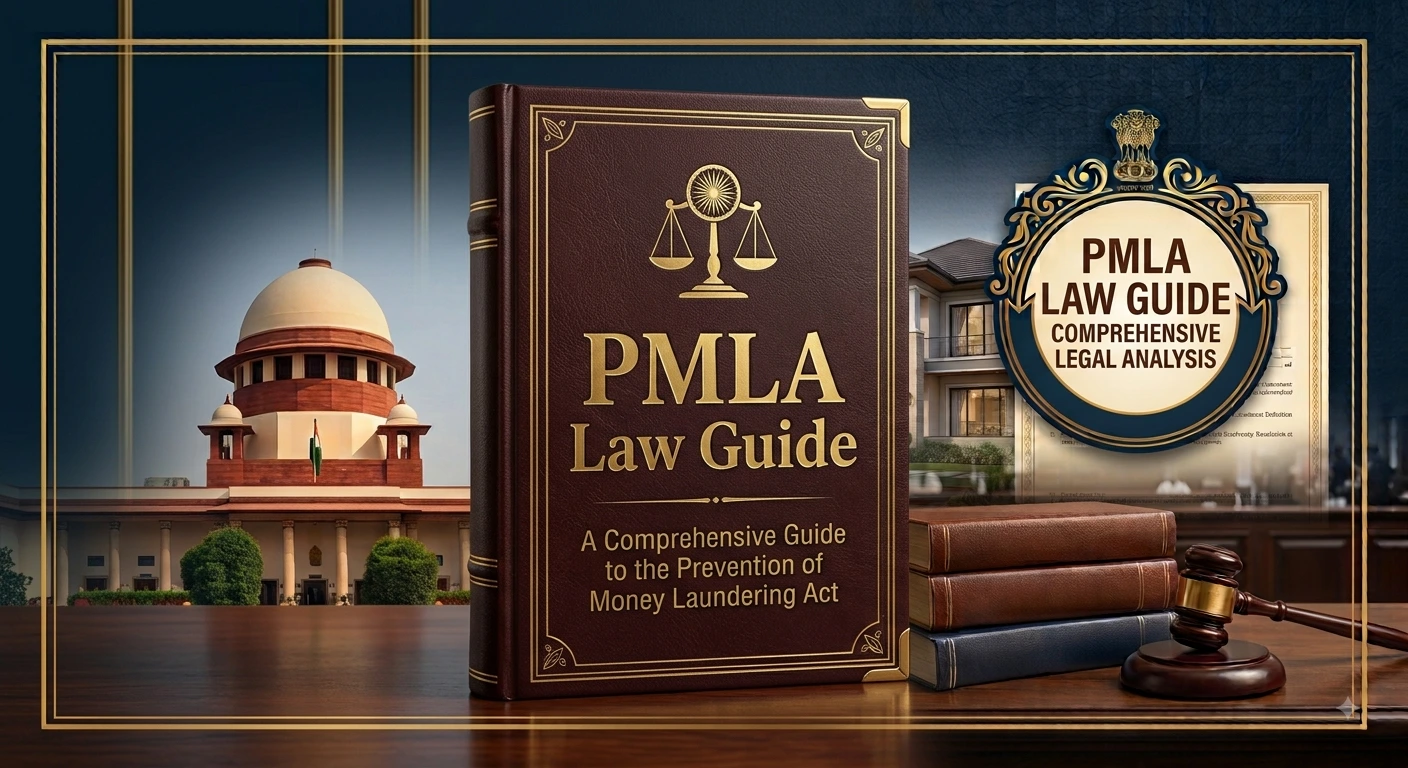
Introduction
Welcome to my complete guide to the Prevention of Money Laundering Act, 2002 (PMLA). This page is your starting point. It explains, in simple language, how the Enforcement Directorate (ED) works, what powers it has, and what rights you have at every stage. From here, you can jump to a detailed guide on any topic.
I have written this guide from experience handling PMLA and ED matters. Whether you have received an ED notice, faced a raid, had property attached, facing trial, or simply want to understand the law, start here — then follow the links to go deeper.
How to Use This Guide
The PMLA can feel overwhelming. To make it simple, I have organised everything into clear stages. Read the short summary of each stage below, then click through to the full article when you want the detail. If the ED has just contacted you, begin with my practical guide on what to do if the ED contacts you.
The guide is arranged in seven parts:
- Understanding the PMLA
- The investigation stage
- The property stage
- Bail and liberty
- The trial stage
- Reference material and case laws
- Compliance and corporate insolvency
Let us take them in turn.
Part 1 — Understanding the PMLA
Before anything else, it helps to understand the basics — what money laundering is, what the ED does, and the key ideas the whole law rests on.
Introduction to PMLA and ED Law in India — my cornerstone guide. It explains money laundering, the offence under Section 3, the ED’s powers, and the journey of a typical case from start to finish. Read this first if you are new to the subject.
Proceeds of Crime and Scheduled Offences Under the PMLA — the two ideas that decide every case. Without a scheduled offence and proceeds of crime, there is no money laundering. This guide explains the nexus the ED must prove.
Scheduled Offences Under PMLA: The Complete List — a full reference to Part A, Part B, and Part C of the Schedule, the ₹1 crore rule, and which crimes bring a case within the PMLA.
Part 2 — The Investigation Stage
Most people meet the PMLA when the ED begins investigating. This stage covers the ED’s file, its summons, its searches, and its power of arrest.
ECIR Explained: ECIR vs FIR, Can You Get a Copy, and Can It Be Quashed? — the ED’s case-opening document. Learn why it is not an FIR, whether you can get a copy, and when the proceedings can be quashed.
Received an ED Summons Under Section 50? Rights, Duties, and How to Respond — the most common form of ED contact. A step-by-step guide to attending, answering, and protecting yourself during questioning.
ED Raids and Search and Seizure Under Sections 17 and 18 — what to do when officers arrive, your rights during a search, how account freezing works, and how to get seized property back.
Arrest Under Section 19 PMLA: Grounds of Arrest, Remand, and Remedies — when the ED can arrest, the safeguards the Supreme Court has enforced, and exactly what to do in the first 24 hours.
Part 3 — The Property Stage
The PMLA attacks the money as well as the person. This stage covers attachment of property, the hearing that follows, appeals, and the fear of losing your home.
Third-Party Challenges to ED Attachment — how a bank, buyer, or family member who is not the accused can protect property caught in an ED case.
Adjudicating Authority and Appellate Tribunal Under the PMLA — the show-cause notice, the hearing, confirmation of attachment, and the appeals under Sections 26 and 42.
Can the ED Take Your House? Attachment, Possession, and Confiscation — the difference between attachment, possession, and confiscation, and why you can usually keep living in your home until the trial ends.
Part 4 — Bail and Liberty
For most people, the biggest fear is losing their freedom. This stage explains how bail works under the strict Section 45 regime, and how to seek protection before arrest.
Bail in PMLA Cases: Supreme Court and Delhi High Court — Complete Guide — the Section 45 twin conditions, the delay jurisprudence, and how the courts balance liberty against the statute.
Anticipatory Bail in PMLA Cases — pre-arrest protection, when to apply, and the grounds that work.
Bail in White-Collar Crimes: Latest Supreme Court Judgments — the wider bail trends across economic offences, including the PMLA.
Part 5 — The Trial Stage
If the case goes to trial, the PMLA follows rules unlike an ordinary criminal case. This stage explains the trial before the Special Court.
Trial Before the PMLA Special Court — the prosecution complaint, cognizance, the mandatory pre-cognizance hearing, the Section 24 reverse burden, sanction for public servants, and the right to documents.
Part 6 — Reference and Case Laws
When you need the authorities, these pages gather the case law in one place.
PMLA Case Laws Digest: 50+ Landmark Judgments — a themed digest of the leading Supreme Court and High Court judgments, each with the facts, sections, and ratio.
Leading Case Laws on ED and PMLA Matters — a practitioner’s overview of the most important rulings and the principles they laid down.
Part 7 — Compliance and Corporate Insolvency
The PMLA is not only about defence. It also imposes duties on businesses, and it interacts with insolvency law.
PMLA Compliance for Reporting Entities: KYC, Record-Keeping, and STRs — the duties of banks, fintechs, crypto platforms, and professionals under Section 12, including the 2023 amendments.
PMLA and IBC: How Section 32A Protects a Corporate Debtor’s Assets — how a clean resolution applicant takes over a company free of prior ED attachment.
The PMLA Journey at a Glance
To tie it all together, here is how a typical PMLA case flows:
- A scheduled offence is committed and an FIR is registered by another agency.
- The ED opens an ECIR and begins its investigation.
- It issues summons under Section 50 and may conduct searches under Sections 17 and 18.
- It may attach property under Section 5, which goes before the Adjudicating Authority.
- In serious cases, it may arrest under Section 19, subject to strict safeguards.
- Bail is governed by the Section 45 twin conditions, softened by the delay jurisprudence.
- The ED files a prosecution complaint, and the Special Court takes cognizance and holds the trial.
- On conviction, property is confiscated; on acquittal or quashing of the scheduled offence, the whole case falls.
At every step, the law provides rights and remedies. Knowing them, and acting early, makes all the difference.
Frequently Asked Questions (FAQ)
Q1. What is the PMLA in simple terms? It is India’s main anti-money-laundering law. It punishes dealing with the proceeds of crime and lets the ED attach property, search, summon, and arrest, subject to safeguards.
Q2. What powers does the ED have? It can register an ECIR, summon under Section 50, search and seize under Sections 17 and 18, attach property under Section 5, and arrest under Section 19.
Q3. Is bail hard to get in a PMLA case? Yes, because of the Section 45 twin conditions. But trial delay can justify bail, and relaxations apply to women, the sick, and small-value cases.
Q4. What happens if the scheduled offence is quashed? The PMLA case ends. Without a scheduled offence, there are no proceeds of crime.
Q5. Does the PMLA apply to my business? It may. Banks, financial institutions, intermediaries, crypto platforms, and certain professionals are reporting entities with compliance duties under Section 12.
Conclusion
The PMLA is a wide and powerful law, but it is not without limits. At every stage — investigation, property, bail, and trial — the law gives real rights, and the courts have built strong safeguards. This guide, and the detailed articles it links to, are here to help you understand those rights and use them.
- Fugitive Economic Offenders Act, 2018: Meaning, Process, Confiscation, and Case Laws

- FEMA vs PMLA: The Key Differences Between the ED’s Two Laws
- PMLA Guide: The Complete Guide to Money Laundering Law, ED Powers, and Your Rights in India

- PMLA Compliance for Reporting Entities: KYC, Record-Keeping, and STRs Under Section 12

- PMLA and IBC: How Section 32A Protects a Corporate Debtor’s Assets from ED Attachment
- Can the ED Take Your House? PMLA Attachment, Possession, and Confiscation Explained

- What to Do If the ED Contacts You: A Step-by-Step Survival Guide

- Scheduled Offences Under PMLA

- Anticipatory Bail in PMLA Cases: Law, the Section 45 Twin Conditions, and How to Get It

- PMLA Case Laws Digest: 50+ Landmark Supreme Court and High Court Judgments on Money Laundering

- Trial Before the PMLA Special Court: Prosecution Complaint, the Section 24 Reverse Burden, Sanction, and Disclosure

- Adjudicating Authority and Appellate Tribunal Under the PMLA: Show-Cause Notices, Section 8 Adjudication, and Appeals Under Sections 26 & 42

- Search and Seizure Under Sections 17 & 18 PMLA: ED Raids and Your Rights — A Practitioner’s Guide

- Proceeds of Crime and Scheduled Offences Under the PMLA: Definition, the Schedule, and the Nexus Requirement

- Arrest Under Section 19 PMLA: Grounds of Arrest, Remand, and Remedies — What to Do in the First 24 Hours

- ECIR Explained: ECIR vs FIR, Can You Get a Copy, and Can It Be Quashed? A Practitioner’s Guide

- Received an ED Summons Under Section 50 PMLA? Rights, Duties, and How to Respond – A Practitioner’s Guide

- How Third Parties With Legitimate Interests Can Contest Attachment Under the PMLA by the ED

- Introduction to Money Laundering, PMLA and ED Law in India: A Complete Guide

- Quashing of Criminal Proceedings by the Delhi High Court: Law, Tests, Landmark Case Laws and Procedure

- Leading Case Laws on ED and PMLA Matters: Landmark Supreme Court Judgments Every Practitioner Must Know

- Bail in PMLA Cases: Supreme Court and Delhi High Court — Complete Guide (2026)