
Introduction
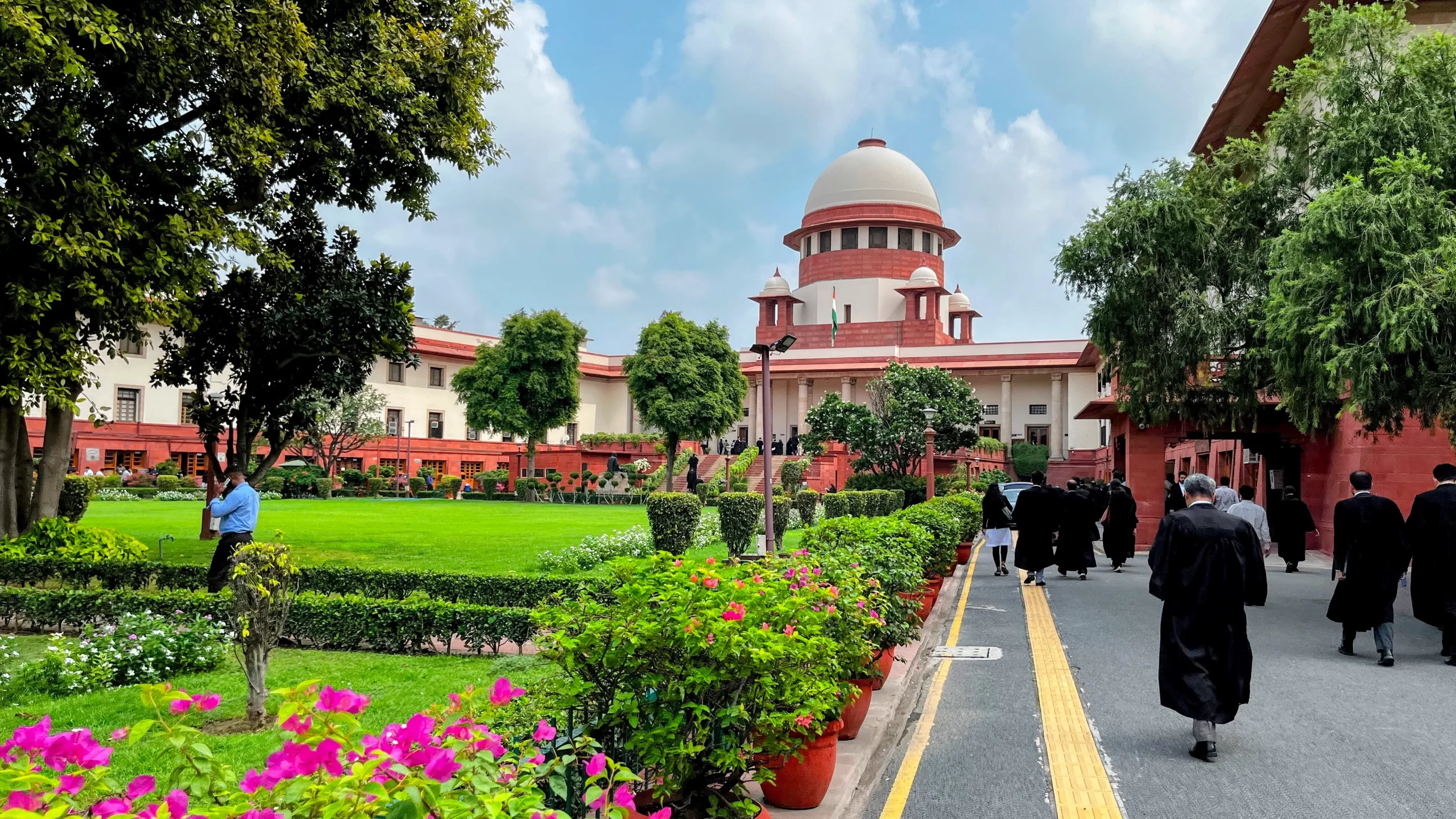
Bail in white collar crimes in India has become one of the most debated topics in criminal law today. With the Enforcement Directorate (ED) and Central Bureau of Investigation (CBI) aggressively prosecuting economic offenders, the Supreme Court of India has stepped in to balance the scales between enforcement and personal liberty. This article covers the latest bail jurisprudence in white collar crimes in India, with a focus on landmark Supreme Court judgments from 2024 and 2025 where bail was granted.
If you are looking for an expert criminal lawyer for bail in white collar crime cases in Delhi, understanding these Supreme Court rulings is the first step.
What Are White Collar Crimes in India?
White collar crimes in India refer to non-violent, financially motivated offences typically committed by individuals in positions of power or trust. These include:
- Money laundering under the Prevention of Money Laundering Act, 2002 (PMLA)
- Bank fraud and loan fraud
- Corporate fraud under the Companies Act, 2013
- Tax evasion and Hawala transactions
- Securities fraud and insider trading
- Corruption and bribery under the Prevention of Corruption Act, 1988
- Ponzi Schemes
- Real estate deals with no intention to deliver
- forging papers to grab property
These offences are investigated by agencies such as the ED, CBI, SFIO (Serious Fraud Investigation Office), police and SEBI as well. Because of the serious nature of these crimes, securing bail in white collar crime cases in India is significantly harder than in ordinary criminal matters.
Why Is Bail So Difficult in White Collar Crimes?
Bail in economic offences India is governed not just by the standard provisions of the Bharatiya Nagarik Suraksha Sanhita, 2023 (BNSS), which replaced the Code of Criminal Procedure, 1973 (CrPC) from July 1, 2024, but also by special statutes with stringent conditions.
The most notable among these is Section 45 of the PMLA, which imposes twin conditions for bail:
- The accused must satisfy the court that there are reasonable grounds to believe they are not guilty.
- The accused must prove they are not likely to commit any offence while on bail.
These twin conditions are very hard to satisfy and effectively reverse the presumption of innocence. The Supreme Court upheld the constitutional validity of these conditions in Vijay Madanlal Choudhary v. Union of India (2022). However, recent Supreme Court decisions show a clear trend: where trials are delayed and personal liberty is at stake, courts will grant bail even in white collar crime cases.
The Golden Rule: Bail Is the Norm, Jail Is the Exception
The foundational principle of Indian bail law remains: “bail is the norm and jail is the exception.” This principle, rooted in Article 21 of the Constitution of India (right to life and personal liberty), applies even to special statutes like the PMLA. Recent Supreme Court rulings in white collar crimes have repeatedly reinforced this principle.
Key Supreme Court Case Laws on Bail
1. Manish Sisodia v. Directorate of Enforcement & CBI
This is one of the most significant Supreme Court bail judgments in PMLA in recent years. Former Delhi Deputy Chief Minister Manish Sisodia was arrested on February 26, 2023 by the CBI in the Delhi Excise Policy case, and subsequently by the ED on March 9, 2023.
After being in custody for 17 months without trial commencing, Sisodia approached the Supreme Court for bail. The Court granted bail, holding that:
- The trial was yet to begin even after prolonged delay, with 493 witnesses to be examined and thousands of documents to be reviewed.
- Keeping an undertrial in custody for an unlimited period until the completion of trial would be a travesty of justice.
- Prolonged incarceration before conviction cannot become punishment without trial.
- The right to a speedy trial under Article 21 must be respected, and it is not overridden by the nature of the offence or the stringent twin conditions of Section 45 PMLA.
Significance for bail in white collar crimes of this case is that this judgment firmly established that delay in trial is a valid and strong ground for bail, even in PMLA cases governed by the stringent Section 45 conditions. Courts cannot turn a blind eye to an accused rotting in custody while the trial does not move forward.
2. Tarsem Lal v. Directorate of Enforcement (2024 INSC 434)
This is a landmark ruling clarifying bail procedure under PMLA. The accused in this case were not arrested during the investigation. After the Special Court took cognizance of the PMLA offence, it issued summons under Section 204 CrPC.
The Supreme Court held:
- Once the Special Court takes cognizance of a PMLA complaint filed by the ED, the ED cannot arrest an accused named in the complaint. The ED can only arrest persons not shown as accused.
- When a person appears before the Special Court pursuant to a summons (not an arrest), the twin conditions under Section 45 PMLA do not apply.
- Accepting a bond under Section 88 CrPC from the accused is not the same as “granting bail.” Therefore, the accused cannot be subjected to the stringent bail conditions just for appearing in response to a summons.
- Bail should be the preferred route even where an accused appears before court; a summons is a sufficient tool to secure the accused’s presence.
Significance for bail in white collar crimes: This judgment significantly protects the rights of accused persons in PMLA cases who have not been arrested. It restricts the ED’s power to arrest after cognizance and reinforces procedural fairness.
3. Enforcement Directorate v. Subhash Sharma (2025)
In this case, the Supreme Court examined what happens when an arrest under PMLA violates constitutional safeguards. The ED had arrested Subhash Sharma, but he had not been produced before a magistrate within 24 hours as required under Article 22(2) of the Constitution and Section 57 CrPC (now BNSS).
The Supreme Court held:
- Section 57 CrPC, which requires production before a magistrate within 24 hours, applies to PMLA proceedings through Section 65 PMLA.
- When an arrest violates these constitutional and statutory safeguards, the arrest becomes illegal and the detention stands vitiated.
- In such cases, the accused must be released on bail irrespective of the twin conditions under Section 45 PMLA.
Significance for bail in white collar crimes: This judgment is a powerful tool for bail applications in PMLA cases where the arrest procedure itself is flawed. It upholds constitutional protections against arbitrary arrest, even in the context of serious economic offences.
4. Arvind Dham v. Enforcement Directorate (January 6, 2026)
Arvind Dham, former promoter and non-executive chairman of Amtek Auto Ltd., was accused in a bank fraud case involving nearly ₹38,000 crore. He was arrested on June 19, 2024, and had been in custody for approximately 16 months and 20 days when the Supreme Court granted him bail.
The bench held:
- The right to a speedy trial under Article 21 is not overridden by the nature of the offence, even in serious money laundering cases.
- Prolonged incarceration of an undertrial without commencement or reasonable progress of trial cannot be justified, as it effectively converts pre-trial detention into punishment.
- All economic offences cannot be placed in one category. The court must balance the gravity of the offence, surrounding circumstances, and the likely sentence, citing Satender Kumar Antil v. CBI (2022).
- Long incarceration alone is not a sufficient ground to deny bail, despite the seriousness of the allegations.
Significance for bail in white collar crimes: The court set aside the Delhi High Court’s order refusing bail and granted relief, demonstrating that even in ₹38,000 crore fraud cases, personal liberty under Article 21 takes precedence if the trial is not progressing.
5. Sarla Gupta v. Enforcement Directorate (2025) 7 SCC 626
Citation: (2025) 7 SCC 626
While this case primarily dealt with disclosure rights, it has important implications for bail. The Supreme Court held that an accused under the PMLA has the right to receive not just the documents the ED relies upon, but all documents and statements collected during the investigation.
Significance for bail in white collar crimes: This ruling strengthens the ability of accused persons to challenge the prosecution’s case, which in turn improves the chances of meeting the first twin condition for bail under Section 45 PMLA — that there are reasonable grounds to believe the accused is not guilty.
6. SFIO v. Aditya Sarda (April 9, 2025)
Citation: Supreme Court of India, April 9, 2025
While this case resulted in the cancellation of anticipatory bail, it is equally important for understanding the limits of bail in white collar crimes. The Supreme Court held that accused persons who evade judicial process and obstruct execution of warrants — especially in serious economic offences — are not entitled to the privilege of anticipatory bail.
The Court reiterated that economic offences “constitute a class apart” due to their deep-rooted conspiracies and grave impact on public funds. However, the key takeaway is that the denial was based on deliberate conduct of evasion, not merely on the seriousness of the offence.
Significance for bail in white collar crimes: Courts will protect bail rights of cooperative accused persons, but those who deliberately evade the law will not get the benefit.
The Triple Test for Bail in Economic Offences
Even in white collar crime cases, courts apply the triple test laid down by the Supreme Court for bail under Section 439 BNSS (formerly CrPC):
- Flight risk — Is the accused likely to flee and not appear for trial?
- Tampering with evidence — Is the accused likely to destroy evidence or influence witnesses?
- Repeat offending — Is there a likelihood of the accused committing more crimes while on bail?
Additionally, in PMLA and other special statute cases, courts must weigh:
- The gravity and nature of the offence
- The duration of custody and likelihood of trial commencement
- The impact on the accused’s fundamental rights under Article 21
- Compliance or non-compliance with arrest procedure
Impact of New Criminal Laws on Bail in White Collar Crimes
Effective July 1, 2024, India’s criminal justice system was overhauled:
- Bharatiya Nagarik Suraksha Sanhita, 2023 (BNSS) replaced the CrPC
- Bharatiya Nyaya Sanhita, 2023 (BNS) replaced the IPC
- Bharatiya Sakshya Adhiniyam, 2023 (BSA) replaced the Indian Evidence Act
A particularly significant development is Section 223 of the BNSS, which introduces for the first time a substantive right for the accused to be heard before cognizance is taken on a chargesheet. The Supreme Court is currently considering the applicability of this section to chargesheets where cognizance was taken before July 1, 2024. This is expected to have a major impact on bail jurisprudence in white collar crimes India going forward.
Key Takeaways: What These Judgments Mean for an Accussed Person
If you or someone you know is facing white collar crime charges and needs bail, here are the critical legal principles to keep in mind:
Prolonged detention is a ground for bail. If the trial is not moving and you have been in custody for a long period, the Supreme Court has repeatedly held that this violates Article 21 and bail should be considered.
Illegal arrest vitiates detention. If the ED or CBI did not follow proper arrest procedure — such as furnishing grounds of arrest in writing (as required by Pankaj Bansal v. UOI, 2023) or producing you before a magistrate within 24 hours — your arrest may be illegal, making bail a right regardless of Section 45 conditions.
Summons is not arrest. If you appeared before the Special Court pursuant to a summons (not arrested), Section 45 PMLA twin conditions do not apply to your bail application.
All economic offences are not equal. The Supreme Court has clearly held that courts must judge each case on its own facts. The mere seriousness of an economic offence is not a standalone ground for refusing bail.
Document access is a right. You have the right to access all documents collected by the ED, not just those relied upon in court. This can significantly strengthen your bail application.
Conclusion: Evolving Bail Jurisprudence in White Collar Crimes India
The bail jurisprudence in white collar crimes in India is rapidly evolving. The Supreme Court, through its landmark judgments in 2024 and 2025, has sent a clear message: personal liberty under Article 21 is sacrosanct, even in the most serious economic offence cases. Prolonged incarceration without trial progress, illegal arrests, procedural violations, and lack of access to documents are all grounds that can — and should — secure bail for an accused.
At the same time, the Court has also made it clear that bail is not an automatic right for those who evade the law or obstruct justice. The evolving legal landscape demands a careful and well-informed approach to bail applications in white collar crime cases.