ECIR Explained: ECIR vs FIR, Can You Get a Copy, and Can It Be Quashed? A Practitioner’s Guide

ECIR under PMLA explained — ECIR vs FIR, right to a copy, and quashing of ECIR by High Courts

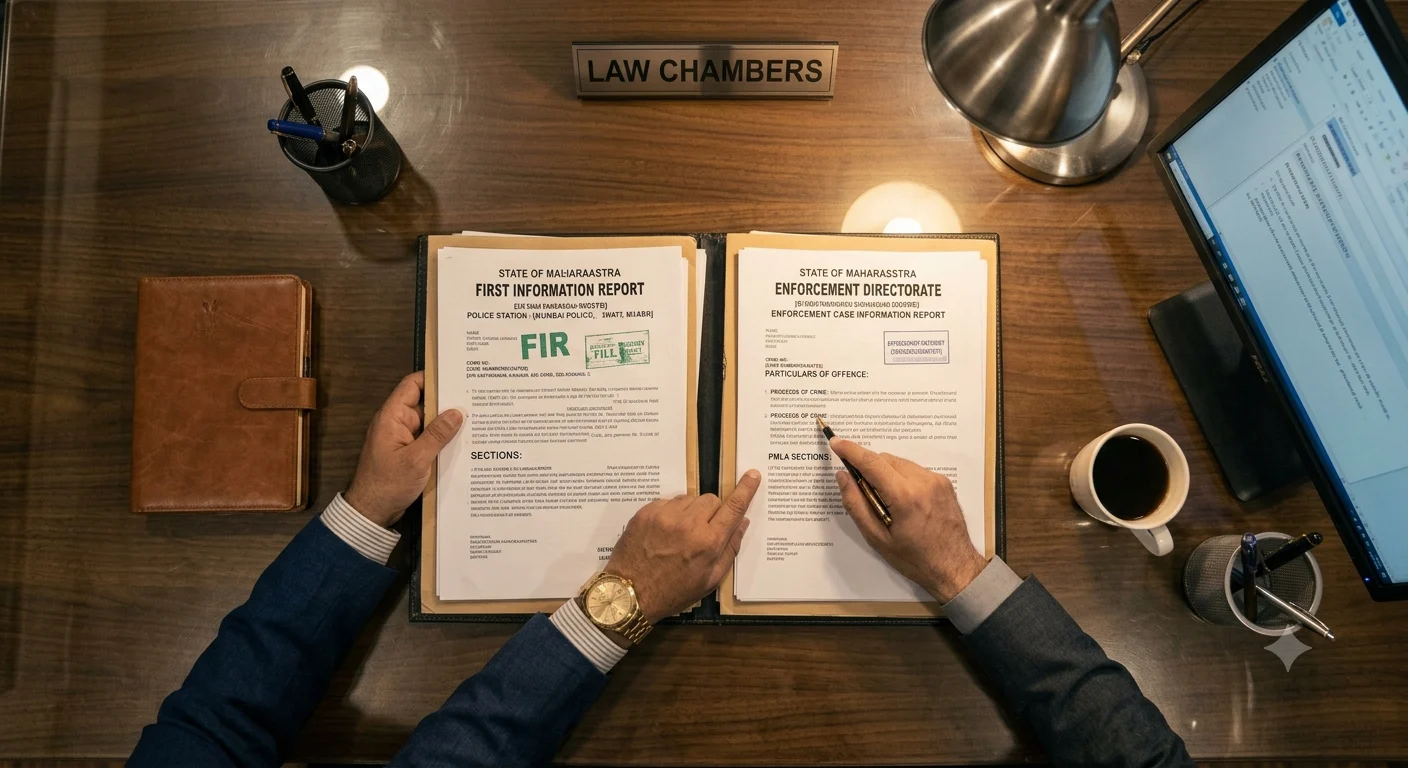
Every ED case begins with a mysterious document — the ECIR. Clients ask me the same three questions: What is it? Can I get a copy? Can it be quashed? The answers are counter-intuitive. The ECIR is not an FIR. You have no absolute right to see it. Yet courts do terminate ECIR-based proceedings — most decisively when the predicate offence collapses. This guide explains the law, the strategy, and the correct prayer to make, with verified judgments from Vijay Madanlal and Parvathi Kollur to the latest High Court rulings.

Introduction to Money Laundering, PMLA and ED Law in India: A Complete Guide

Introduction to PMLA and ED law in India — money laundering, ECIR, arrest, attachment and bail explained

The Prevention of Money Laundering Act, 2002 arms the Enforcement Directorate with extraordinary powers — to summon, search, attach, and arrest. This cornerstone guide introduces PMLA and ED law in India in plain language. It explains the offence of money laundering under Section 3, proceeds of crime and scheduled offences, the ECIR, arrest safeguards under Section 19, attachment and confiscation, the Section 45 twin conditions for bail, and trial before Special Courts. Every concept is backed by verified Supreme Court rulings — from Vijay Madanlal Choudhary and Pankaj Bansal to Tarsem Lal and Manish Sisodia — making this the starting point of our complete PMLA series.

Leading Case Laws on ED and PMLA Matters: Landmark Supreme Court Judgments Every Practitioner Must Know

Leading case laws on ED and PMLA matters — landmark Supreme Court judgments on Section 45 bail, Section 19 arrest and ECIR

The Prevention of Money Laundering Act, 2002 has become one of the most litigated statutes in India. This article traces the leading Supreme Court case laws that govern ED action — from Vijay Madanlal Choudhary upholding the ED’s powers, to Pankaj Bansal and Arvind Kejriwal on Section 19 arrest safeguards, Tarsem Lal barring arrest after cognizance, and Manish Sisodia on bail where trials are delayed. Each judgment is explained with the principle it laid down, covering Section 45 twin conditions, ECIR, Section 50 statements, sanction for public servants, and the effect of quashing the scheduled offence. An essential ready reckoner for practitioners and accused persons facing ED proceedings.