
As an Advocate-on-Record Supreme Court of India, I maintain this platform to share structured legal writing, statutory commentary, and practical insights across various areas of law. The purpose of this website is to provide clear, reliable and well-researched information for students, professionals, and anyone seeking to understand legal principles, procedures and judicial developments. Explore Legal Writings.
Vakalatnama | Professional Ethics Code
Profile
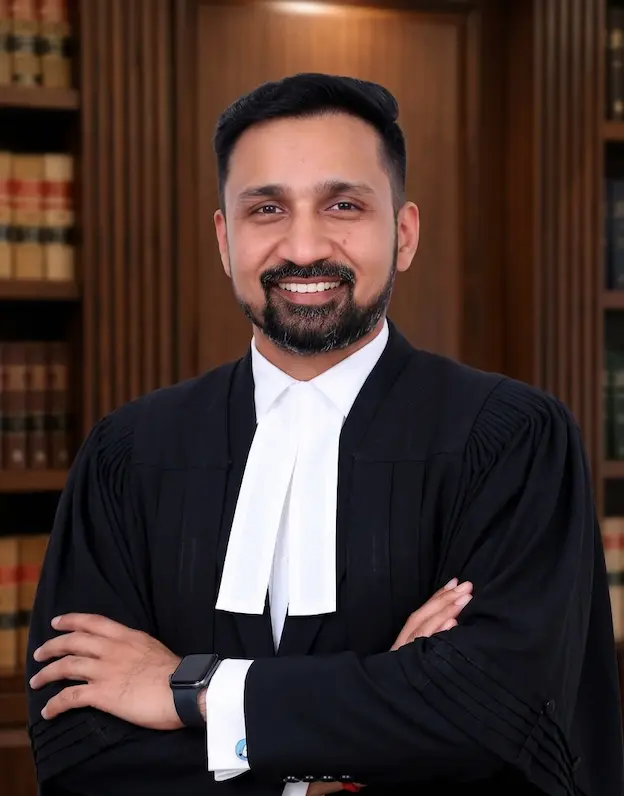
Prashant Kanha is an Advocate-on-Record at the Supreme Court of India with over fourteen years of experience in litigation, legal advisory and dispute resolution. He is also a trained Mediator by Mediation and Conciliation Project Committee (MCPC) Supreme Court of India. He began practice after completing his B.A. LL.B. (Hons.) from Dr. Ram Manohar Lohiya National Law University, Lucknow, and enrolling with the Bar Council of Uttar Pradesh (UPBC2930/11).
Over the years, he has appeared before the Supreme Court of India, various High Courts, Tribunals, Commissions, Regulatory Bodies, and trial courts across the country. His work spans civil, commercial, taxation, criminal, service, real-estate and construction law matters, with significant experience in contractual disputes, regulatory litigation and statutory interpretation.
Prashant is also an Advocate-on-Roll with the High Court of Judicature at Allahabad and a member of the High Court Bar Association, Allahabad, Delhi High Court Bar Association, and the Supreme Court Bar Association, New Delhi, the Supreme Court Advocates-on-Record Association, and the Society of Construction Law, India. Since 2020, he has been a Partner at Redlaw Legal Services, advising private entities, multinational companies and several Central and State public-sector undertakings, including Maharatna companies, on complex legal matters.
Having cleared the Supreme Court’s Advocate-on-Record Examination, he is registered as an Advocate-on-Record with AOR Code 3126. His work is characterised by meticulous drafting, a structured approach to litigation strategy, and a rights-based perspective grounded in constitutional values. The practice name “Prashant Kanha” represents his professional identity, while the name on record remains “Prashant”.
He continues to advise and represent clients in a wide range of practice areas with a focus on clarity, procedural precision and principled advocacy.
Most Read | Supreme Court
Logo Description
Disclaimer & Consent

In the logo, the four equal pillars symbolise JUSTICE, LIBERTY, EQUALITY and FRATERNITY as envisaged in the preamble of the Constitution of India. The box around the pillars symbolises the law which seeks to protect and uphold these values and rights.