CBI Investigation and Defence in India: A Complete Guide to Powers, Process, and Your Rights

CBI investigation and defence in India — the CBI's powers, jurisdiction, state consent, FIR, arrest and bail explained - Best CBI lawyers Delhi

A CBI case is one of the most serious things a person or a public servant can face. But the CBI’s powers are not unlimited — they flow from a single 1946 law, they often need the State’s consent, and the courts have built real safeguards around them. This complete guide explains CBI investigation and defence in India in plain language: how the CBI works, its jurisdiction and the state-consent rule, how a case begins, arrest and bail, and how a CBI case is defended, with the leading Supreme Court judgments.

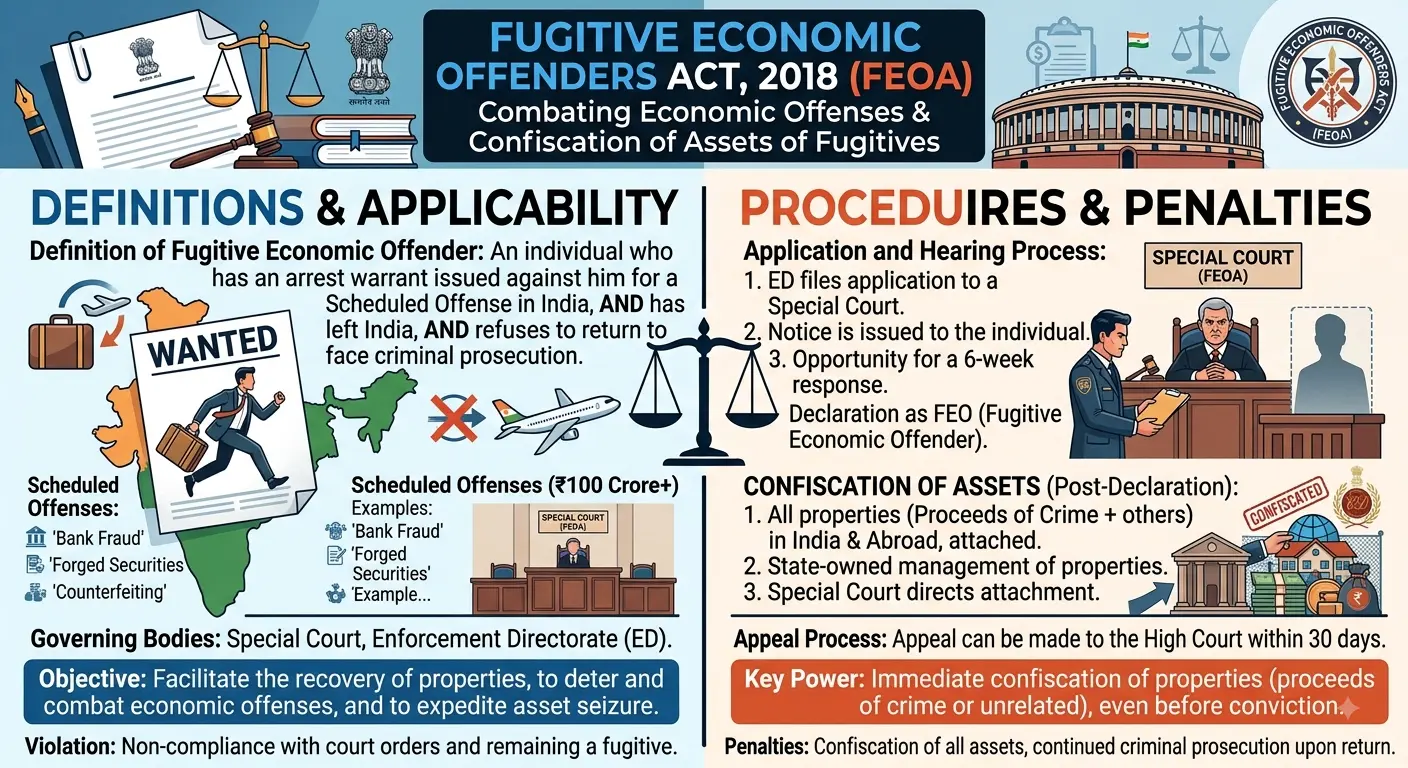
Fugitive Economic Offenders Act, 2018: Meaning, Process, Confiscation, and Case Laws

Fugitive Economic Offenders Act 2018 explained — who is an FEO, the declaration process and confiscation of property

When big-ticket economic offenders flee India to escape prosecution, the Fugitive Economic Offenders Act, 2018 lets the State strike back. It allows a special court to declare a person a “fugitive economic offender” and confiscate their property — even property that is not proceeds of crime. This guide explains the FEOA in simple language: who qualifies, the ₹100 crore threshold, the step-by-step process, the powerful confiscation and civil-claim provisions, and the leading cases from Vijay Mallya to Nirav Modi.

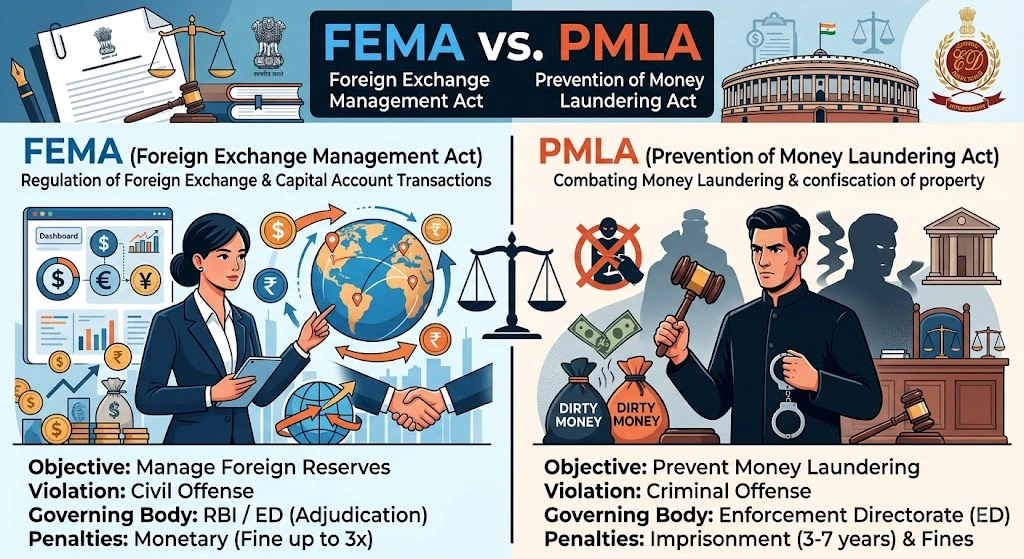
FEMA vs PMLA: The Key Differences Between the ED’s Two Laws

FEMA vs PMLA — the key differences between the ED's two laws, civil penalties versus criminal money laundering

The Enforcement Directorate enforces two very different laws — FEMA and the PMLA — and people constantly confuse them. One is civil, about foreign exchange, and ends in a monetary penalty you can often compound. The other is criminal, about money laundering, and can lead to arrest, attachment, and confiscation. Getting the difference right, early, changes your whole strategy. This guide explains FEMA vs PMLA in plain language, with the key differences, the procedure under each, how one can escalate into the other, and a verified 2025 ruling that reins in the ED.

PMLA Guide: The Complete Guide to Money Laundering Law, ED Powers, and Your Rights in India

PMLA Guide — the complete guide to money laundering law, ED powers, arrest, attachment, bail and trial in India

Your complete, plain-language guide to the Prevention of Money Laundering Act. Start here to understand how the ED works — the ECIR, summons, search, arrest, attachment, bail and trial — and follow the links to detailed guides on each stage, plus case laws, compliance, and answers to the questions people ask most.

PMLA Compliance for Reporting Entities: KYC, Record-Keeping, and STRs Under Section 12

PMLA compliance for reporting entities — KYC, record-keeping and STR filing with FIU-IND under Section 12

PMLA compliance is no longer just a banking concern. Since 2023, it reaches crypto platforms, fintechs, and even chartered accountants and company secretaries. Every reporting entity must verify clients, keep records, and report suspicious transactions to FIU-IND under Section 12. This practitioner’s guide explains, in simple language, who is a reporting entity, the KYC and record-keeping duties, the different reports (STR, CTR and more), the 2023 amendments, and the penalties for getting it wrong — so your business stays on the right side of the law.

PMLA and IBC: How Section 32A Protects a Corporate Debtor’s Assets from ED Attachment

PMLA and IBC — how Section 32A protects a corporate debtor's assets from ED attachment after a resolution plan

What happens when the ED attaches the assets of a company that is going through insolvency? Section 32A of the IBC gives a powerful answer: once a resolution plan is approved and the management changes, the corporate debtor gets a “clean slate”, and prior ED attachments over its assets fall away. This guide explains the PMLA–IBC interplay in simple language — how Section 32A works, what the Supreme Court held in Manish Kumar, and how successful resolution applicants protect their assets — using only verified case laws.

Can the ED Take Your House? PMLA Attachment, Possession, and Confiscation Explained

Can the ED take your house — PMLA attachment, possession under Section 8(4) and confiscation explained

“Can the ED take my house?” is one of the most anxious questions clients ask me. The answer is reassuring: the ED cannot simply seize your home. Attachment is not confiscation, and even after attachment is confirmed, the Supreme Court has held you can usually continue to live in your house until the trial ends. This plain-language guide explains when the ED can attach, take possession, and finally confiscate property, what your rights are at each stage, and how to protect your home — using only verified Supreme Court and High Court rulings.

What to Do If the ED Contacts You: A Step-by-Step Survival Guide

What to do if the ED contacts you — a step-by-step guide to ED notices, summons and raids and your rights

A call, a notice, a summons, or officers at your door — being contacted by the Enforcement Directorate is frightening. What you do in the first hours can shape the entire case. This practical, plain-language guide explains exactly what to do if the ED contacts you: your rights, the right first steps, the mistakes that hurt people most, and when to bring in a lawyer. Written from experience handling ED and PMLA matters.

Scheduled Offences Under PMLA

Scheduled offences under PMLA — complete list of Part A, Part B and Part C offences and the nexus requirement

Every PMLA case needs a “scheduled offence” — the predicate crime the whole prosecution rests on. No scheduled offence means no proceeds of crime, and no money laundering. This complete reference explains the PMLA Schedule in simple language: what Part A, Part B and Part C cover, the ₹1 crore rule, the statutes and IPC/BNS sections involved, the cross-border rule, and the crucial nexus requirement — with the leading Supreme Court rulings.

Anticipatory Bail in PMLA Cases: Law, the Section 45 Twin Conditions, and How to Get It

Anticipatory bail in PMLA cases — Section 45 twin conditions, grounds, drafting and Supreme Court rulings explained

Fear of arrest is often the first thing a PMLA notice brings. Anticipatory bail can protect you before the ED acts — but the PMLA makes it harder than an ordinary case. This detailed guide explains when to apply, the Section 45 twin conditions the court must weigh, the grounds that actually work, how to draft the application, the conditions the court may impose, and the Supreme Court rulings that shape pre-arrest bail in money laundering cases — including when you may need no bail at all.

PMLA Case Laws Digest: 50+ Landmark Supreme Court and High Court Judgments on Money Laundering

PMLA case laws digest — landmark Supreme Court and High Court judgments on money laundering, arrest, attachment and bail

A single, verified reference for the case law that governs every PMLA matter. This digest collects 50+ landmark Supreme Court and High Court judgments — each with the case name, brief facts, the sections involved, and the ratio laid down — organised by theme, from the constitutional foundation in Vijay Madanlal Choudhary to the arrest safeguards of Pankaj Bansal and Arvind Kejriwal, the bail jurisprudence of Manish Sisodia, and the disclosure and cognizance rulings of Sarla Gupta and Kushal Kumar Agarwal. Citations and ratios cross-checked against primary sources.

Trial Before the PMLA Special Court: Prosecution Complaint, the Section 24 Reverse Burden, Sanction, and Disclosure

Trial before the PMLA Special Court — prosecution complaint, Section 24 reverse burden, sanction and disclosure explained Top Lawyer Best Advocate PMLA Delhi

The ED does not file a chargesheet — it files a “prosecution complaint.” Once the Special Court takes cognizance, an unusual trial begins: the law presumes the proceeds are tainted, and the accused must prove otherwise. Drawing from my PMLA practice, this guide walks the trial stage end to end — Section 44 cognizance, the mandatory pre-cognizance hearing under Section 223 BNSS, the Section 24 reverse burden and how to rebut it, the Section 197 sanction defence for public servants, the right to unrelied documents, and why an accused who was never arrested may not need bail at all — with latest judgments including Tarsem Lal, Kushal Kumar Agarwal, Sarla Gupta, and Bibhu Prasad Acharya.