Fugitive Economic Offenders Act, 2018: Meaning, Process, Confiscation, and Case Laws
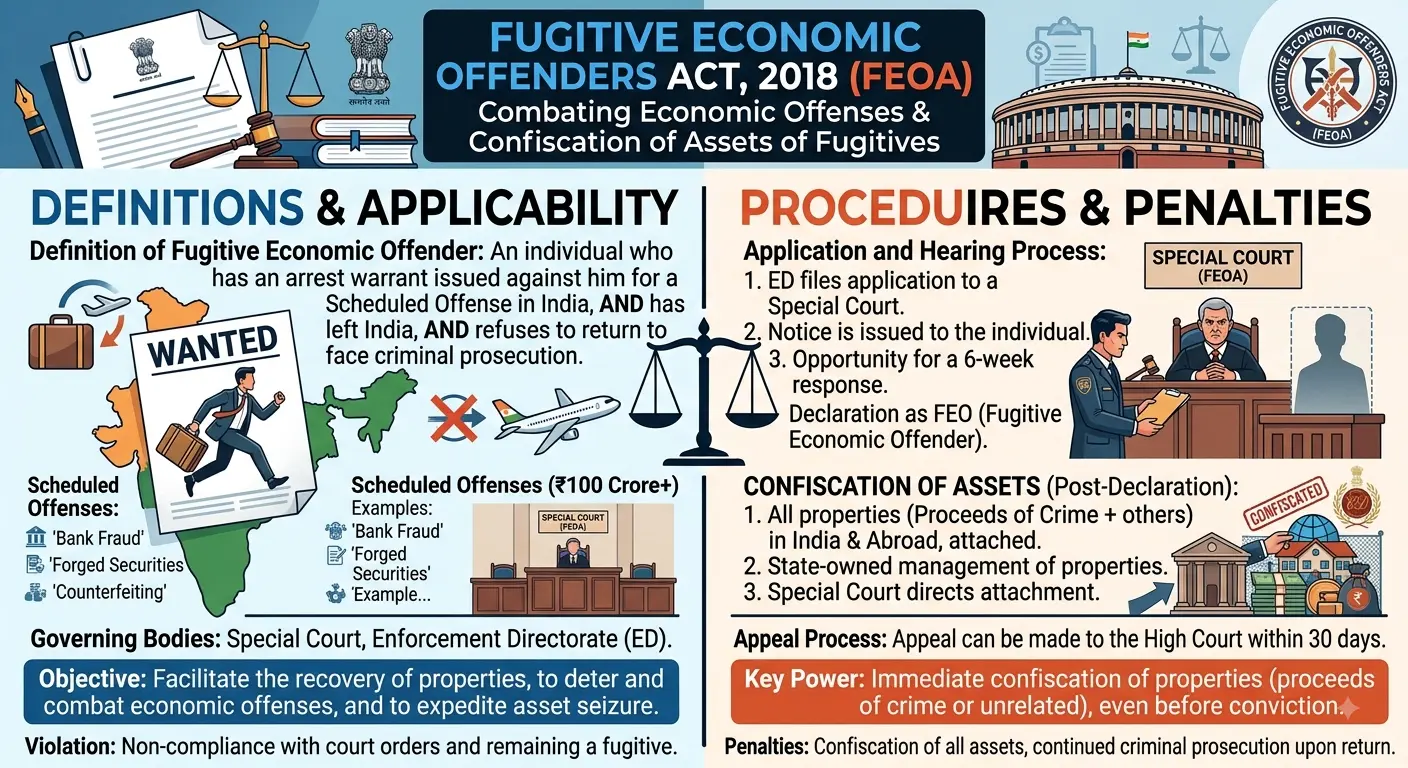
Fugitive Economic Offenders Act 2018 explained — who is an FEO, the declaration process and confiscation of property

When big-ticket economic offenders flee India to escape prosecution, the Fugitive Economic Offenders Act, 2018 lets the State strike back. It allows a special court to declare a person a “fugitive economic offender” and confiscate their property — even property that is not proceeds of crime. This guide explains the FEOA in simple language: who qualifies, the ₹100 crore threshold, the step-by-step process, the powerful confiscation and civil-claim provisions, and the leading cases from Vijay Mallya to Nirav Modi.
FEMA vs PMLA: The Key Differences Between the ED’s Two Laws

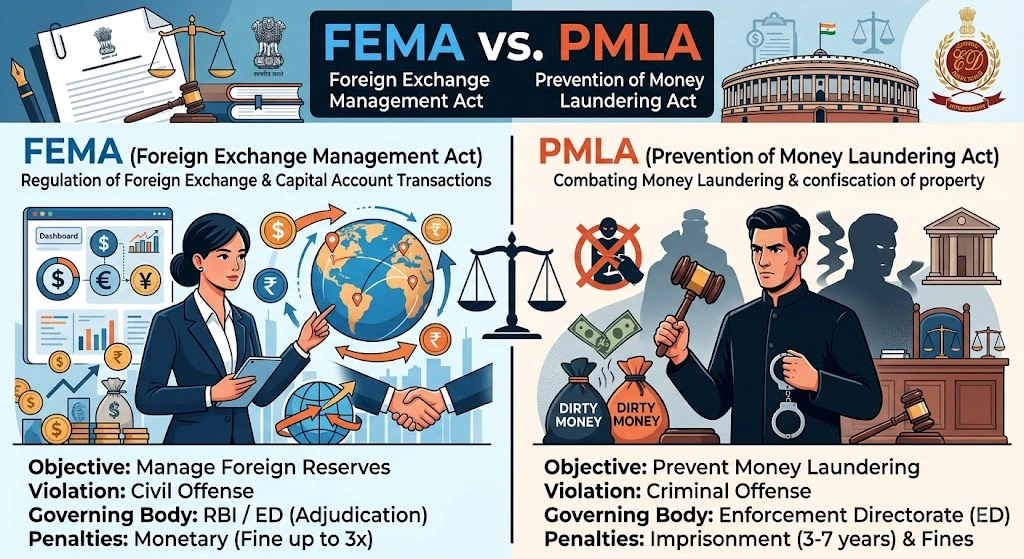
FEMA vs PMLA — the key differences between the ED's two laws, civil penalties versus criminal money laundering

The Enforcement Directorate enforces two very different laws — FEMA and the PMLA — and people constantly confuse them. One is civil, about foreign exchange, and ends in a monetary penalty you can often compound. The other is criminal, about money laundering, and can lead to arrest, attachment, and confiscation. Getting the difference right, early, changes your whole strategy. This guide explains FEMA vs PMLA in plain language, with the key differences, the procedure under each, how one can escalate into the other, and a verified 2025 ruling that reins in the ED.