ECIR Explained: ECIR vs FIR, Can You Get a Copy, and Can It Be Quashed? A Practitioner’s Guide
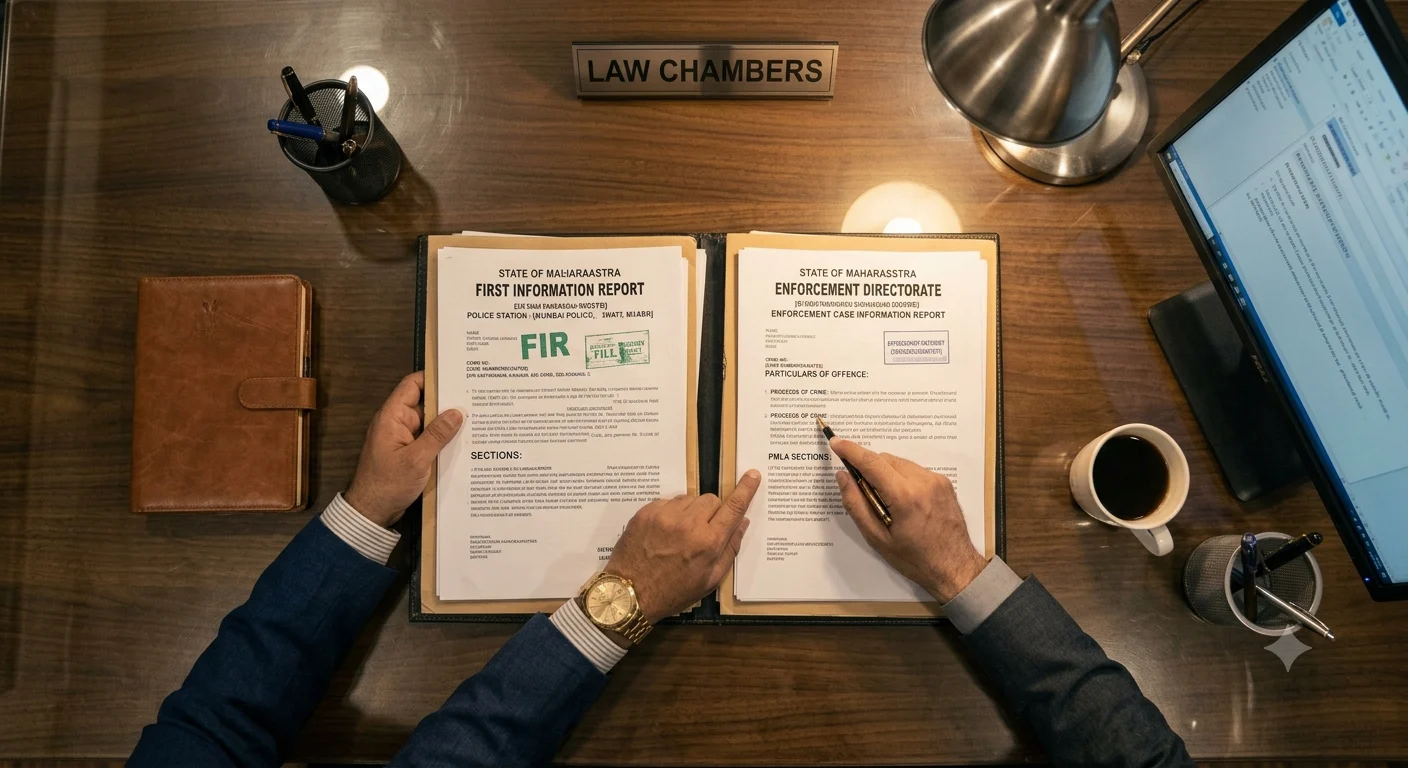
ECIR under PMLA explained — ECIR vs FIR, right to a copy, and quashing of ECIR by High Courts

Every ED case begins with a mysterious document — the ECIR. Clients ask me the same three questions: What is it? Can I get a copy? Can it be quashed? The answers are counter-intuitive. The ECIR is not an FIR. You have no absolute right to see it. Yet courts do terminate ECIR-based proceedings — most decisively when the predicate offence collapses. This guide explains the law, the strategy, and the correct prayer to make, with verified judgments from Vijay Madanlal and Parvathi Kollur to the latest High Court rulings.

Quashing of Criminal Proceedings by the Delhi High Court: Law, Tests, Landmark Case Laws and Procedure

Quashing of criminal proceedings by the Delhi High Court under Section 482 CrPC and Section 528 BNSS — grounds, tests and landmark case laws

Quashing of criminal proceedings under Section 482 CrPC and Section 528 BNSS represents one of the most potent supervisory powers exercised by the High Courts. Over the years, the Delhi High Court has evolved a structured jurisprudence—drawing from landmark Supreme Court precedents such as Bhajan Lal, Gian Singh, Neeharika Infrastructure, Parbatbhai Aahir, and Rajiv Thapar—to determine when continuing a criminal case would amount to an abuse of process or a miscarriage of justice.

This article explains the governing legal principles, the tests applied by courts, and the procedural framework followed in Delhi for quashing FIRs, charge‑sheets, and criminal complaints. It also analyses recent trends, including settlement‑based quashing, scrutiny of matrimonial disputes under Section 498A, and the emerging interface between the CrPC and the BNSS. The aim is to provide practitioners with a practical, precedent‑aligned guide to navigating quashing petitions before the Delhi High Court.

Quashing of Chargesheet u/s 498A, 406, 323, 34 IPC r/w Sections 3 & 4 of the Dowry Prohibition Act Against In-Laws: Complete Guide with Supreme Court and Delhi High Court Case Laws

Quashing of chargesheet under Section 498A 406 IPC 85 BNS against in-laws by Delhi High Court and Supreme Court of India

A chargesheet under Sections 498A, 406, 323, 34 IPC read with Sections 3 and 4 of the Dowry Prohibition Act often names the husband’s entire family. The Supreme Court and the Delhi High Court have consistently quashed such proceedings against in-laws where the allegations are general and omnibus. This article explains the law of quashing under Section 482 CrPC / Section 528 BNSS, traces landmark rulings from Bhajan Lal and Kahkashan Kausar to Dara Lakshmi Narayana and Ghanshyam Soni, and distils the principles that protect the father-in-law, mother-in-law, and brothers from false implication in matrimonial cases.

Quashing of Criminal Proceedings u/s 528 BNSS by Higher Court: Supreme Court’s Four-Step Test & Grounds Explained

quashing of criminal case in India under section 482 CrPC or 528 BNSS or Article 226 of the Constitution of India.

The Supreme Court’s 2025 ruling in Pradeep Kumar Kesarwani v. State of U.P. clarifies when High Courts can quash criminal proceedings under Section 482 CrPC and Section 528 BNSS. This article explains the Court’s structured four-step test, revisits the Bhajan Lal principles, and provides a practical, litigation-oriented guide for lawyers seeking quashing before the High Courts and Supreme Court.