Cyber Fraud Crime: Complaints and Redressal in 2026

Standard Operating Procedure 2026 for cyber fraud complaints under NCRP and CFCFRMS – simple guide for citizens and banks. best cyber crime lawyer Delhi

This article provides a simple, step-by-step guide for citizens on how to report cyber-fraud crimes in 2026 using the NCRP and CFCFRMS systems. It explains how online financial fraud complaints are filed, how banks and law-enforcement respond, and what recovery and redressal processes are available. From lodging a complaint on the National Cybercrime Reporting Portal to understanding the new MHA SOP of 2026, this guide helps victims act quickly and correctly to maximise the chances of fund-freezing and recovery.


False Allegations of Sexual Offences and Judicial Scrutiny in India for Anticipatory Bail

Disgruntled Girl

Introduction The jurisprudence on anticipatory bail in India has undergone notable refinement as courts increasingly confront cases where allegations of rape or threats of prosecution for sexual offences appear to function as instruments of extortion, coercion or retaliation rather than as authentic assertions of victimisation. Although such misuse remains statistically limited, it raises serious doctrinal … Read more

Notice u/ Section 35(3) BNSS: New Safeguards Against Arrest

Section 35(3) BNSS notice of appearance safeguard against arrest under new criminal law

Section 35(3) BNSS introduces a modern safeguard against unnecessary arrest by requiring police to issue a notice of appearance when custody is not needed. This article explains the legal rights, procedural protections, key Supreme Court rulings, and the practical steps you must follow after receiving such a notice, along with remedies against misuse.

Quashing of Criminal Proceedings u/s 528 BNSS by Higher Court: Supreme Court’s Four-Step Test & Grounds Explained

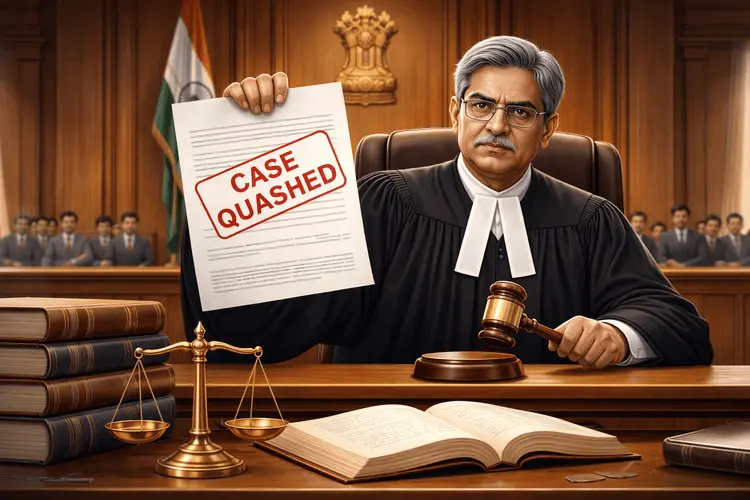
quashing of criminal case in India under section 482 CrPC or 528 BNSS or Article 226 of the Constitution of India.

The Supreme Court’s 2025 ruling in Pradeep Kumar Kesarwani v. State of U.P. clarifies when High Courts can quash criminal proceedings under Section 482 CrPC and Section 528 BNSS. This article explains the Court’s structured four-step test, revisits the Bhajan Lal principles, and provides a practical, litigation-oriented guide for lawyers seeking quashing before the High Courts and Supreme Court.

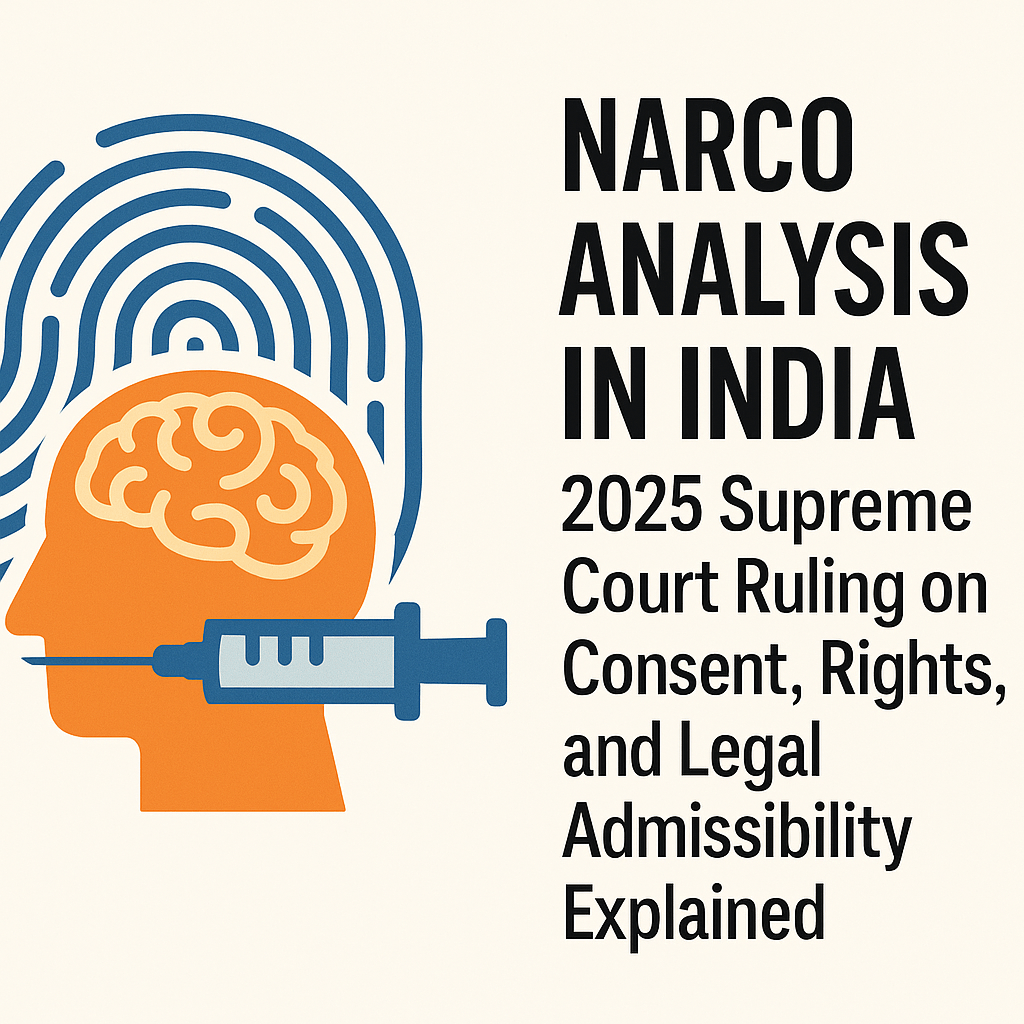
Narco-Analysis Constitutionality in India: 2025 Supreme Court Ruling on Consent, Rights, and Legal Admissibility Explained.

narco analysis in India - almesh v state of bihar

The Supreme Court’s 2025 ruling in Amlesh Kumar v. State of Bihar reaffirms that narco-analysis, polygraph and brain-mapping tests cannot be used without free and informed consent. The judgment clarifies that such techniques cannot be ordered during bail hearings, cannot form the sole basis of conviction, and are not an absolute right for the accused. By reiterating the principles laid down in Selvi v. State of Karnataka (2010), the Court strengthens constitutional protections under Articles 20(3) and 21 and sets clear limits on the use of coercive investigative methods.

Section 497 BNSS – Bhartiya Nagarik Suraksha Sanhita, 2023 & 451 Cr.P.C. Order for Custody and Disposal of Property Pending Trial

Section 497 BNSS custody and disposal of property pending trial explained by Advocate on Record Supreme Court of India

Detailed commentary on Section 497 of the Bhartiya Nagarik Suraksha Sanhita, 2023 (BNSS), corresponding to Section 451 CrPC, governing custody and disposal of property pending trial. Includes procedure, timelines, Supreme Court precedents and practical drafting guidance for release of seized property.

Section 152 BNSS – Bhartiya Nagarik Suraksha Sanhita, 2023 & Section 133 Cr.P.C. Order for Removal of Nuisance

Flat illustration depicting Indian criminal law for Section 152 BNSS, showing Executive Magistrate powers, police, Supreme Court, and removal of public nuisance.

This article tries to give a complete guide to Section 152 of Bharatiya Nagarik Suraksha Sanhita 2023 (BNSS) – conditional order for removal of nuisance. Covers ingredients, procedure, landmark Supreme Court & High Court judgments, appeal remedies, and practical tips for lawyers and litigants. Equivalent to Section 133 CrPC.

Section 296 BNS – Bhartiya Nyaya Sanhita, 2023 & S. 294 IPC: Obscene acts and songs

BNS Bharatiya Nyaya Sanhita Commentary of sections and cross reference to IPC Indian Penal Code Section

Section 296 of the Bharatiya Nyaya Sanhita, 2023 replaces Section 294 IPC and penalizes obscene acts or obscene songs/words done in or near a public place to the annoyance of others. This article explains the ingredients of the offence, key differences between BNS and IPC, important Supreme Court and High Court judgments, and the legal standards for obscenity in India.

Section 61 BNS – Bhartiya Nyaya Sanhita, 2023 and 120A & B IPC; Criminal Conspiracy

Section 61 BNS criminal conspiracy replacing Sections 120A and 120B IPC explained

Section 61 of the Bharatiya Nyaya Sanhita, 2023 replaces Sections 120A and 120B IPC governing criminal conspiracy in India. This detailed legal analysis explains the ingredients of conspiracy, punishment under Section 61(2) BNS, leading Supreme Court case laws, and the critical implications for ED and PMLA proceedings after Pavana Dibbur and Yash Tuteja. A practical guide for criminal law practitioners navigating the transition from IPC to BNS.

Comparative Table of Sections Between Indian Penal Code, 1860 and Bharatiya Nyaya Sanhita, 2023

Click here to Download the Word File & PDF File of the Comparative table of Sections between Indian Penal Code, 1860 and Bhartiya Nyaya Sanhita, 2023 Indian Penal Code, 1860 Bharatiya Nyaya Sanhita, 2023 Sec# Title of Section Sec.# Title of Section 1 Title and extent of operation of the Code 1 Short title, commencement … Read more