
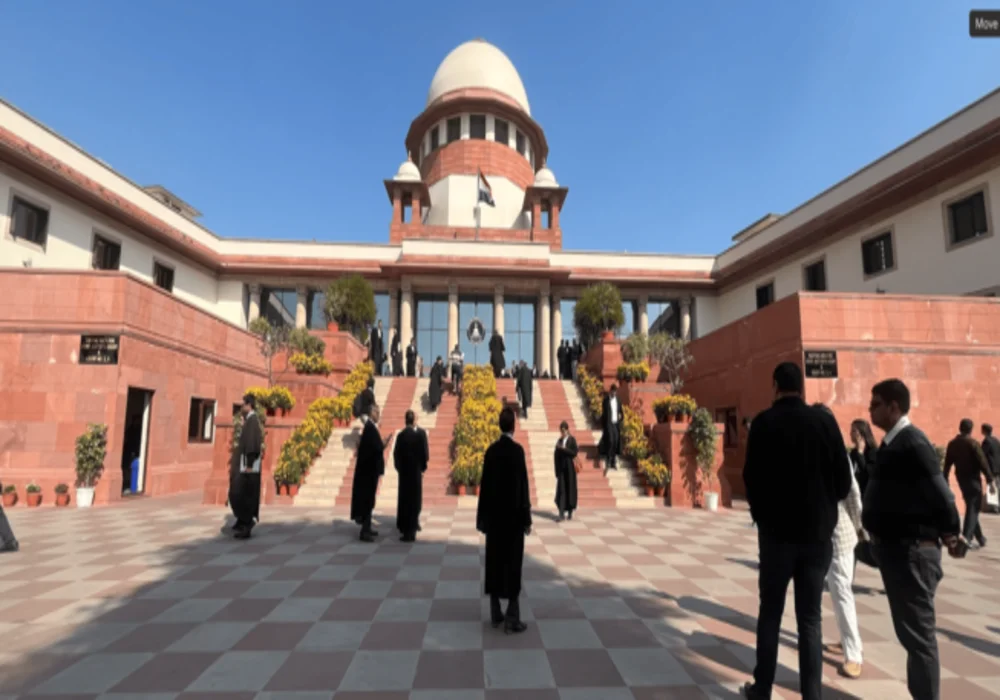
Introduction: Why Most Special Leave Petitions Fail
On any miscellaneous day (Monday and Friday) before the Supreme Court of India, hundreds of Special Leave Petitions under Article 136 are called out in rapid succession. Many are dismissed within minutes, often by a brief, non-speaking order. For practitioners who regularly appear in admission matters, this pattern is familiar. It reflects the constitutional nature of Article 136 rather than arbitrariness in decision-making.
For a deeper doctrinal understanding of the constitutional architecture of this provision, see my detailed analysis on Article 136 of the Constitution of India and the nature of Special Leave jurisdiction.
Article 136 does not create an appeal as of right. It confers a discretionary and extraordinary jurisdiction. Therefore, a Special Leave Petition must do more than identify error in the impugned judgment. It must persuade the Court that the case warrants constitutional intervention. Experience shows that the overwhelming majority of SLPs fail not because they are entirely devoid of merit, but because they do not satisfy the high threshold required for the exercise of this extraordinary power.
This article examines the doctrinal foundations of Article 136, the principles governing admission, and the drafting discipline required for an SLP to survive the admission stage.
1. Constitutional Foundation of Article 136
Article 136 empowers the Supreme Court to grant special leave to appeal from any judgment, decree, determination, sentence, or order passed by any court or tribunal in India, except those relating to the armed forces. Although the wording is expansive, judicial interpretation has consistently imposed self-restraint.
In Pritam Singh v. State (AIR 1950 SC 169), the Supreme Court clarified that Article 136 is not intended to convert the Court into a regular forum of appeal. The jurisdiction must be exercised sparingly and only in exceptional cases. This principle has remained foundational. The historical evolution of this extraordinary jurisdiction, including its pre-Constitution lineage and Constituent Assembly debates, is examined in detail in my article on the history and origin of the Special Leave Petition under Article 136.
Subsequently, in Durga Shankar Mehta v. Raghuraj Singh (AIR 1954 SC 520), the Court recognised the wide amplitude of Article 136 while simultaneously affirming that its exercise depends on judicial discretion.
A crucial doctrinal clarification came in Kunhayammed v. State of Kerala (2000) 245 ITR 360 (SC). The Court explained that proceedings under Article 136 occur in two distinct stages. At the first stage, the Court considers whether to grant leave. Only upon grant of leave does the matter convert into a regular appeal. Importantly, dismissal of an SLP at the admission stage does not result in merger of the lower court’s judgment with that of the Supreme Court.
Later, in Mathai @ Joby v. George (2010) 4 SCC 358, the Court reiterated that Article 136 cannot be treated as a routine appellate mechanism. The power is extraordinary; therefore, the threshold is high.
These authorities shape the central drafting principle: an SLP must be written for the leave stage, not the appeal stage.
2. When Does the Supreme Court Grant Leave?
The Supreme Court admits a Special Leave Petition when the case demonstrates constitutional seriousness. Certain recognised categories increase the likelihood of admission.
First, a substantial question of law of general public importance significantly strengthens the petition. In Bengal Chemical & Pharmaceutical Works Ltd. v. Their Employees (AIR 1959 SC 633), the Court acknowledged the importance of resolving significant legal questions affecting broader legal interpretation. An SLP that transcends individual grievance and presents a clear legal issue stands a stronger chance of admission.
Second, grave miscarriage of justice may justify intervention. In Dhakeswari Cotton Mills Ltd. v. CIT (AIR 1955 SC 65), the Court intervened where findings were rendered without proper evidentiary basis. However, mere dissatisfaction with findings does not suffice. The injustice must be demonstrable and serious.
Third, perversity in findings may open the door to Article 136. The Court has consistently held, including in decisions such as State of Maharashtra v. Jagmohan Singh Kuldip Singh Anand (2004) 7 SCC 659, that findings based on no evidence, or in disregard of material evidence, may warrant interference.
Fourth, constitutional violations involving Articles 14, 19, or 21 strengthen the petition. Where fundamental rights are implicated, the constitutional dimension must be clearly articulated.
Finally, where conflicting views of High Courts exist on the same legal issue, the need for authoritative resolution may persuade the Court to grant leave.
3. Structure of a Well-Drafted Special Leave Petition
The structure of the petition often determines survival at admission.
Synopsis
The Synopsis is the most critical section. In admission hearings, the Bench frequently forms its first impression from the opening pages. Therefore, the Synopsis must immediately identify the precise legal issue, pinpoint the specific error in the impugned judgment, and explain why intervention under Article 136 is constitutionally warranted. It should distil the controversy to its core rather than narrate facts expansively.
List of Dates
The List of Dates must be strictly chronological and non-argumentative. It serves as a structural guide for the Bench and should assist in quickly understanding the procedural trajectory.
The Statement of Facts should remain neutral and chronological. Advocacy belongs in the Grounds section. When the narrative becomes argumentative, the credibility of the petition suffers.
Questions of Law
Questions of Law must be framed with precision. Instead of broadly asking whether the High Court erred, the petition should identify the specific legal principle misapplied, ignored, or incorrectly interpreted.
The framing of Questions of Law is not a mechanical exercise. It determines whether the Supreme Court perceives the matter as a constitutional issue or as mere appellate dissatisfaction. A poorly framed question signals weakness. A precise question signals seriousness.
How Not to Frame Questions of Law
The following formulations are vague, argumentative, or appellate in tone:
- “Whether the High Court erred in law?”
- “Whether the impugned judgment is illegal and bad in law?”
- “Whether the findings recorded by the courts below are perverse?”
- “Whether the petitioner is entitled to relief?”
These questions suffer from three defects. First, they are generic. Second, they do not identify the legal principle involved. Third, they merely restate grounds in interrogative form. Such drafting invites dismissal because it fails to demonstrate constitutional significance.
How to Properly Frame Questions of Law
A well-framed question of law should:
- Identify the precise legal issue.
- Indicate the statutory or constitutional provision involved.
- Reflect the jurisprudential conflict or error.
- Avoid argument or rhetorical adjectives.
For example:
- “Whether the High Court, while exercising jurisdiction under Article 226, could re-appreciate disputed questions of fact contrary to settled principles governing writ jurisdiction?”
- “Whether dismissal of the petitioner’s claim without considering binding precedent of this Hon’ble Court in para __ of [Case Name and citation] violates Article 141 of the Constitution?”
- “Whether concurrent findings of fact can be sustained when material documentary evidence was ignored, thereby rendering the findings perverse in law?”
- “Whether the interpretation placed by the High Court on Section ___ of the ___ Act is contrary to the legislative scheme and previous authoritative pronouncements?”
- “Whether denial of procedural hearing before adverse civil consequences violates principles of natural justice embedded in Article 14 of the Constitution?”
In my opinion, each of these questions does three things simultaneously: it identifies the legal principle, narrows the issue, and signals constitutional relevance.
Grounds
The Grounds should begin with the strongest legal point. Each ground must be concise, non-repetitive, and linked to specific findings in the impugned judgment. Drafting discipline at this stage is crucial.
The drafting of Grounds in a Special Leave Petition requires precision, restraint, and legal focus. Grounds are not arguments in full detail; nor are they emotional objections to the outcome. They must identify specific legal errors in the impugned judgment and demonstrate why such errors warrant interference under Article 136.
Bad Examples:
- “Because the impugned judgment is illegal, arbitrary and bad in law.”
- “Because the High Court failed to appreciate the facts properly.”
- “Because the judgment is contrary to the evidence on record.”
- “Because grave injustice has been caused to the petitioner.”
Good Examples:
A properly framed ground must:
(1) Identify the specific legal error;
(2) Refer to the relevant provision or precedent;
(3) Demonstrate the legal consequence of that error.
For example:
- Ground A: Because the High Court, while exercising jurisdiction under Article 226, exceeded its supervisory limits by re-appreciating disputed questions of fact contrary to settled principles laid down by this Hon’ble Court.
- Ground B: Because the impugned judgment fails to consider and apply the binding precedent of this Hon’ble Court in [Case Name], thereby violating Article 141 of the Constitution.
- Ground C: Because the appellate court reversed concurrent findings without framing substantial questions of law as mandated under Section 100 of the Code of Civil Procedure.
- Ground D: Because material documentary evidence, specifically Exhibit P-4 and Exhibit P-7, was completely ignored, rendering the findings perverse in law.
- Ground E: Because the petitioner was denied an opportunity of hearing before adverse civil consequences were imposed, in violation of principles of natural justice embedded in Article 14 of the Constitution.
Ultimately, the Grounds section must reflect constitutional precision rather than emotional dissatisfaction. Each ground should independently disclose a legal infirmity that is apparent on the face of the impugned judgment. Overstatement weakens credibility; repetition dilutes force. At the admission stage, the Court is not persuaded by volume, but by clarity. Therefore, a few sharply framed legal grounds are far more effective than a catalogue of generalized objections.
Prayer
The Prayer Clause must seek grant of special leave and specify any interim relief clearly and proportionately.
4. Drafting Principles That Improve Admission Probability
Effective drafting under Article 136 requires strategic restraint. The strongest argument must appear at the beginning. The opening pages should answer one decisive question: why must this case be heard?
Conciseness enhances credibility. Admission hearings are brief, and the Court’s docket is heavy. Therefore, each proposition must be clearly articulated and free from unnecessary elaboration.
An SLP should demonstrate error rather than merely assert it. Instead of labelling the judgment as perverse or illegal, the petition should identify the specific paragraph where binding precedent was ignored or statutory interpretation was misapplied.
Re-appreciation of evidence is rarely successful at the leave stage. Article 136 is not designed to re-evaluate factual findings unless they are demonstrably perverse or unsupported by the record.
Meticulous compliance with the Supreme Court Rules, 2013 is equally important. Limitation, certified copies, proper affidavits, and filing through an Advocate-on-Record are essential procedural requirements. Registry objections can delay listing and undermine urgent relief.
5. Common Reasons for Dismissal
A large number of Special Leave Petitions are dismissed because they attempt to convert Article 136 into a routine third appeal. Others fail due to verbosity, vague framing of questions of law, repetitive grounds, unexplained delay, or suppression of material facts.
As emphasised in Mathai @ Joby, Article 136 is not meant to be invoked in ordinary matters. Consequently, drafting must reflect constitutional seriousness rather than appellate dissatisfaction.
6. Admission Hearing Strategy
The written SLP must anticipate the dynamics of the admission courtroom. Counsel often receives only a few minutes to persuade the Bench. Therefore, the written structure should serve as an oral roadmap.
In practice, effective admission advocacy usually involves presenting one sharply framed question of law, identifying one clear legal error in the impugned judgment, and articulating one compelling constitutional reason for intervention. When the written petition is structured accordingly, oral advocacy becomes focused and persuasive.
7. Doctrine of Merger and Strategic Implications
The doctrine of merger has important strategic implications in Article 136 matters. In Kunhayammed v. State of Kerala, the Supreme Court clarified that dismissal of an SLP at the admission stage does not result in merger of the lower court’s judgment with that of the Supreme Court. Such dismissal does not constitute affirmation on merits and does not amount to a declaration of law under Article 141.
This distinction is critical when advising clients regarding review petitions, curative petitions, or alternative remedies. Admission is a jurisdictional gateway, not a final adjudication.
The doctrinal nuances and practical consequences of dismissal at the SLP stage are analysed comprehensively in my article on the effect of dismissal of a Special Leave Petition and the doctrine of merger
Final Practical Checklist Before Filing an SLP
Before filing a Special Leave Petition under Article 136, consider the following:
- Does the case raise a substantial question of law of general public importance?
- Is there a demonstrable miscarriage of justice or perversity?
- Is a constitutional dimension clearly articulated?
- Is the strongest ground placed at the beginning?
- Is the Synopsis concise and focused?
- Are the grounds free from repetition?
- Is limitation strictly complied with under the Supreme Court Rules?
- Is the relief precise and proportionate?
If the answer to the first question is uncertain, reconsider whether Article 136 is the appropriate remedy.
Conclusion
Article 136 is among the most powerful discretionary jurisdictions in the Indian constitutional framework. Yet its strength lies not in frequency of exercise, but in restraint. The Supreme Court intervenes not to correct every error, but to correct errors that matter to the law.
A Special Leave Petition that survives admission is not merely well-argued; it is constitutionally disciplined. It identifies a precise legal fault line, demonstrates real jurisprudential consequence, and presents the issue with clarity and restraint. At the admission stage, persuasion does not depend on volume, emotion, or repetition. It depends on structure, precision, and constitutional seriousness.
Survival under Article 136 is not accidental. It is the result of deliberate drafting, strategic judgment, and survival under Article 136 is not accidental. It is the result of deliberate drafting, strategic judgment, and respect for the Court’s extraordinary jurisdiction — qualities that define serious Advocate-on-Record practice before the Supreme Court of India. In the end, the question is not whether the lower court was wrong, but whether the case is worthy of the Supreme Court’s time.. In the end, the question is not whether the lower court was wrong, it is whether the case is worthy of the Supreme Court’s time.