
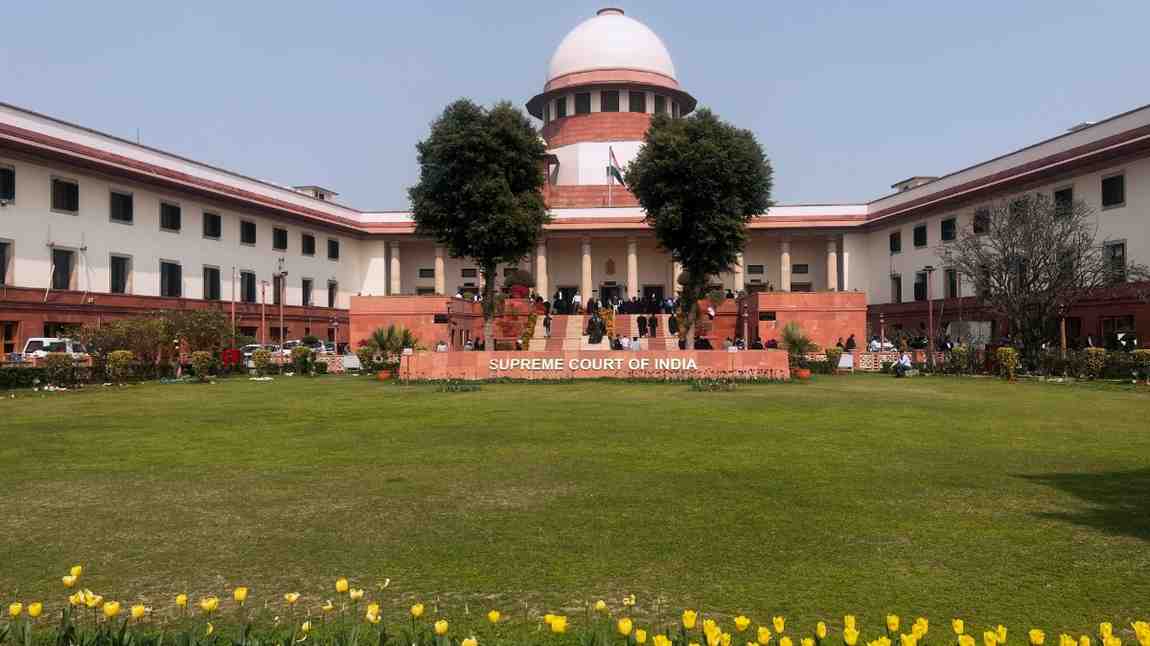
Article 32 writ petitions allow citizens to approach the Supreme Court directly when their fundamental rights are violated.
1. Why Article 32 Is the Heart of the Indian Constitution
Article 32 of the Constitution of India occupies a central place in Indian constitutional law. It guarantees every citizen the right to approach the Supreme Court directly for the enforcement of fundamental rights as provided in the Constitution of India with expansion made by the Supreme Court. Litigants may also invoke other remedies before the Supreme Court, such as Special Leave Petitions under Article 136 but that is not direct.
Unlike many constitutional provisions, Article 32 does not merely prescribe a procedure. Instead, it creates a substantive constitutional remedy. Whenever a fundamental right is violated, a citizen may directly approach the Supreme Court by filing a writ petition.
Dr. B.R. Ambedkar emphasised the importance of this provision during the Constituent Assembly debates. According to him:
“If I was asked to name any particular article in this Constitution as the most important — an article without which this Constitution would be a nullity — I could not refer to any other article except this one. It is the very soul of the Constitution and the very heart of it.”
The framers clearly understood an important legal principle: a right without a remedy has little value. Therefore, they ensured that fundamental rights would always remain enforceable through judicial remedies.
Consequently, Article 32 gives citizens a powerful constitutional tool. Through this provision, they can seek direct protection from the Supreme Court whenever the State violates their fundamental rights.
2. What Is Article 32 of the Constitution of India?
Article 32 guarantees the right to move the Supreme Court for the enforcement of fundamental rights.
More importantly, the Constitution empowers the Supreme Court to issue several constitutional writs for that purpose. These writs include:
- Habeas Corpus
- Mandamus
- Certiorari
- Prohibition
- Quo Warranto
Each of these writs protects individuals against unlawful actions of the State.
Furthermore, Article 32 creates two constitutional consequences. First, it recognises the right to constitutional remedies as a fundamental right. Second, it gives the Supreme Court the authority to enforce those rights.
Therefore, Article 32 stands as one of the strongest guarantees of liberty in the Indian Constitution.
3. Text of Article 32 of the Constitution
For clarity, the Constitution provides the following framework under Article 32:
32. Remedies for enforcement of rights conferred by this Part
(1)The right to move the Supreme Court by appropriate proceedings for the enforcement of the rights conferred by this Part is guaranteed.
(2)The Supreme Court shall have power to issue directions or orders or writs, including writs in the nature of habeas corpus, mandamus, prohibition, quo warrant and certiorari, whichever may be appropriate, for the enforcement of any of the rights conferred by this Part.
(3)Without prejudice to the powers conferred on the Supreme Court by clauses (1) and (2), Parliament may by law empower any other court to exercise within the local limits of its jurisdiction ill or any of the powers exercisable by the Supreme Court under clause (2).
(4)The right guaranteed by this article shall not be suspended except as otherwise provided for by this Constitution.
Taken together, these clauses create a strong constitutional mechanism for protecting fundamental rights.
4. Constitutional Philosophy Behind Article 32
To understand Article 32 properly, one must consider the historical context in which the Constitution emerged.
During colonial rule, individuals possessed very limited legal remedies against executive power. Although certain rights existed in theory, courts did not always provide effective enforcement.
Therefore, the framers of the Constitution chose a different approach. They allowed citizens to approach the highest constitutional court directly. This approach reflects the well-known legal maxim:
Ubi jus ibi remedium — where there is a right, there must be a remedy.
Accordingly, Article 32 transforms this principle into a constitutional guarantee. As a result, the Supreme Court functions as the ultimate guardian of fundamental rights.
5. Article 32 and the Basic Structure Doctrine
The Supreme Court has repeatedly emphasised the constitutional significance of Article 32.
For instance, in L. Chandra Kumar v Union of India (1997), a seven-judge bench examined the scope of judicial review under the Constitution. The Court concluded that judicial review under Articles 32 and 226 forms part of the basic structure of the Constitution.
Therefore, two consequences follow. First, Parliament cannot abolish the power of judicial review. Second, constitutional amendments cannot destroy or dilute the core jurisdiction of the Supreme Court under Article 32.
Thus, Article 32 remains a permanent safeguard within India’s constitutional framework.
6. Types of Writs Under Article 32
When a litigant files an Article 32 writ petition in the Supreme Court, the Court may grant relief through one of five constitutional writs.
6.1 Habeas Corpus
The writ of Habeas Corpus literally means “produce the body”.
Through this writ, the Court protects personal liberty. The Court directs the authorities to produce a detained person before it and explain the legal basis of detention.
If the authorities cannot justify the detention, the Court immediately orders the release of the individual.
Consequently, habeas corpus remains one of the most powerful remedies against unlawful detention.
6.2 Mandamus
The writ of Mandamus means “we command”.
Through mandamus, the Court directs a public authority to perform a legal duty that it has neglected or refused to perform.
For example, the Court may issue mandamus against:
- government departments
- statutory bodies
- public officials
However, courts generally refuse to issue mandamus against purely private individuals.
6.3 Certiorari
The writ of Certiorari allows the Supreme Court to quash unlawful decisions of lower courts or tribunals. Courts typically issue certiorari when a judicial authority:
- acts without jurisdiction
- exceeds its jurisdiction
- violates principles of natural justice
Therefore, certiorari functions as a corrective remedy.
6.4 Prohibition
The writ of Prohibition operates as a preventive remedy. Through this writ, the Supreme Court restrains a lower court, authority or tribunal from continuing proceedings that fall outside its jurisdiction. While certiorari corrects a completed action, prohibition stops unlawful proceedings before they conclude.
6.5 Quo Warranto
The writ of Quo Warranto means “by what authority”. Through this writ, the Court examines whether a person lawfully holds a public office. If the appointment violates statutory provisions, the Court may remove that person from office. Importantly, any citizen may file a quo warranto petition. The petitioner does not need to prove personal injury.
7. Article 32 vs Article 226: Key Differences
Many litigants often ask whether they should approach the Supreme Court under Article 32 or move the High Court under Article 226.
However, these provisions differ in several important respects. Article 32 applies only to violations of fundamental rights. In contrast, Article 226 allows High Courts to enforce both fundamental rights and other legal rights.
Court
Litigants file Article 32 petitions directly before the Supreme Court of India. Meanwhile, litigants file Article 226 petitions before the High Courts.
Nature of the Right
Article 32 itself constitutes a fundamental right.
On the other hand, Article 226 provides a discretionary jurisdiction of the High Courts.
Territorial Jurisdiction
The Supreme Court exercises jurisdiction across the entire territory of India.
Conversely, High Courts exercise jurisdiction only within their respective states.
Therefore, litigants must carefully consider which forum suits their case.
8. When Does the Supreme Court Entertain Article 32 Petitions?
Although Article 32 provides a fundamental right, the Supreme Court exercises judicial discipline while exercising this jurisdiction.
In many situations, the Court advises litigants to approach the High Courts first. Nevertheless, the Court directly entertains Article 32 petitions in several important circumstances.
Situations Where Article 32 Is Invoked
For example, the Supreme Court may entertain an Article 32 petition when:
- a clear violation of fundamental rights exists
- the dispute involves constitutional interpretation
- the issue affects citizens across India
- High Court remedies prove ineffective
- personal liberty under Article 21 faces threat
- the matter involves public interest litigation
Thus, the Court balances accessibility with judicial restraint.
9. How to File a Writ Petition in the Supreme Court
Many litigants frequently ask how to file a writ petition in the Supreme Court under Article 32. The procedure usually follows several steps.
Step 1: Identify the Fundamental Right Violated
First, the petitioner must identify the specific fundamental right involved.
Common violations arise under:
- Article 14 (equality)
- Article 19 (freedom)
- Article 21 (life and personal liberty)
Step 2: Draft the Writ Petition
Next, the petitioner prepares a writ petition explaining the facts of the case.
The petition usually includes:
- details of the petitioner
- constitutional provisions invoked
- facts supporting the claim
- relief sought
- supporting documents
Clear drafting helps the Court understand the constitutional issues involved.
Step 3: Filing Through an Advocate-on-Record
After drafting the petition, an Advocate-on-Record (AOR) must file the matter before the Supreme Court registry.
The AOR performs several responsibilities, including:
- ensuring procedural compliance
- filing documents
- managing court records
Without an Advocate-on-Record, the registry will not accept the petition.
Step 4: Filing Affidavits and Annexures
Additionally, the petition must include supporting documents.
These documents typically include:
- a sworn affidavit
- relevant annexures
- supporting evidence
These materials establish the factual foundation of the petition.
Step 5: Initial Hearing Before the Supreme Court
Finally, the Supreme Court lists the matter before a bench.
At the preliminary stage, the Court may:
- issue notice to the respondents
- grant interim relief
- dismiss the petition
- refer the matter to a larger bench
Thus, the Court determines whether the case warrants detailed constitutional examination.
10. Important Article 32 Judgments
Several landmark judgments have shaped Article 32 jurisprudence.
Romesh Thappar v State of Madras (1950)
In this case, the Supreme Court recognised Article 32 as a guaranteed remedy for enforcing fundamental rights.
Kesavananda Bharati v State of Kerala (1973)
The Court developed the basic structure doctrine, which protects judicial review under Article 32.
L Chandra Kumar v Union of India (1997)
The Court reaffirmed that judicial review under Articles 32 and 226 forms part of the Constitution’s basic structure.
ADM Jabalpur v Shivakant Shukla (1976)
This controversial decision addressed the suspension of rights during the Emergency. Later constitutional developments significantly criticised the reasoning in this case.
11. Limits of Article 32 Jurisdiction
Despite its wide scope, Article 32 does not apply to every dispute.
For example, litigants cannot use Article 32 for:
- challenging Supreme Court judgments
- filing appeals against High Court decisions
- enforcing purely contractual rights
- resolving private disputes
Instead, litigants may pursue other remedies such as Special Leave Petitions under Article 136.
12. Practical Guidance for Lawyers
Lawyers who file Article 32 petitions should follow several practical principles.
Draft Precise Pleadings
First, the petition must clearly identify the violated fundamental right.
Explain Supreme Court Jurisdiction
Second, the petition should explain why the Supreme Court should hear the matter directly.
Maintain Full Disclosure
Third, the petitioner must disclose all relevant facts. Courts often dismiss petitions that suppress material information.
Avoid Misuse of Article 32
Finally, lawyers should avoid using Article 32 merely to bypass High Court jurisdiction.
13. Frequently Asked Questions
What is an Article 32 writ petition?
An Article 32 writ petition allows a person to approach the Supreme Court for enforcement of fundamental rights.
Can a citizen directly approach the Supreme Court under Article 32?
Yes. Citizens may directly approach the Supreme Court when fundamental rights are violated.
What is the difference between Article 32 and Article 226?
Article 32 applies to fundamental rights and operates before the Supreme Court. In contrast, Article 226 allows High Courts to enforce both fundamental and legal rights.
Can the Supreme Court quash FIRs under Article 32?
In exceptional cases involving violation of fundamental rights, the Supreme Court may intervene.
Who can file Article 32 petitions?
Any person whose fundamental rights have been violated may file a petition. In addition, public interest litigations may also invoke Article 32.
14. Conclusion
Article 32 remains one of the strongest safeguards of liberty in the Indian Constitution. Through this provision, citizens can approach the Supreme Court whenever the State violates their fundamental rights. Moreover, Article 32 strengthens the rule of law by ensuring judicial protection of constitutional freedoms.
Therefore, the provision continues to play a crucial role in Indian constitutional democracy. Ultimately, Article 32 ensures that the promises of the Constitution remain enforceable in practice.