
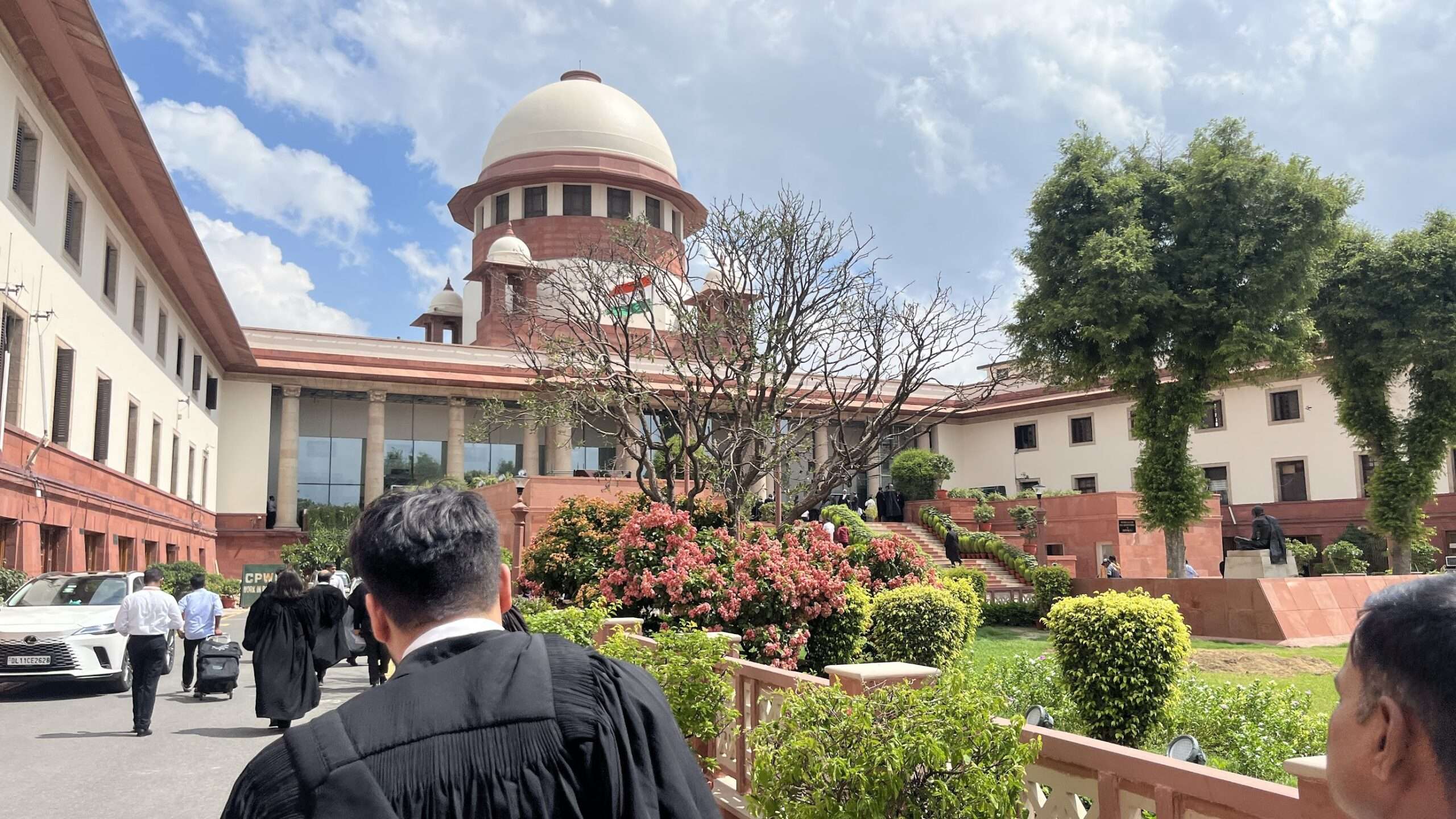
Institutional Role, Constitutional Basis, Examination Structure, and Professional Responsibility
I. Introduction: Understanding the AOR Role
As an Advocate on Record practicing before the Supreme Court of India, I often encounter questions from clients, fellow advocates, and law students about what exactly distinguishes an AOR from other legal practitioners. This comprehensive guide draws from my years of legal experience and aims to demystify the AOR system, explaining not just the “what” but the “why” and “how” of this unique institution that forms the backbone of Supreme Court litigation in India.
When you approach the Supreme Court of India with a legal matter, whether it’s a Special Leave Petition (SLP) challenging a High Court order against you, a caveat if High Court order is in your favour, a writ petition under Article 32 for protection of fundamental rights, an statutory appeal from a tribunal or high court, transfer petition, review petition, curative petition, affidavit etc. you will inevitably need to engage an Advocate on Record. Unlike other courts in India where any enrolled advocate under the Advocates Act, 1961 can file and argue cases, the Supreme Court operates under a specialized system that mandates representation through AORs, a select group of advocates who have undergone rigorous training and passed one of India’s most challenging legal examinations.
This article explores every facet of the AOR system: from its constitutional foundations to the examination process, from our daily responsibilities to the ethical standards we uphold, and most importantly, how we serve as a crucial bridge between litigants and the apex court of the world’s largest democracy.
II. The Constitutional and Statutory Framework
Article 145 and the Power to Frame Rules
The Advocate on Record system finds its constitutional authority in Article 145(1) of the Constitution of India, which empowers the Supreme Court to make rules “for regulating generally the practice and procedure of the Court.” This includes provisions relating to “persons practicing before the Court.”
Pursuant to this constitutional mandate, the Supreme Court framed the Supreme Court Rules, 1966, which were subsequently updated and replaced by the Supreme Court Rules, 2013. The AOR system is governed primarily by Order IV of these Rules, which lays down the qualifications, duties, responsibilities, and consequences of misconduct for Advocates on Record.
The genius of this system lies in its recognition that the Supreme Court, as the final court of appeal and the guardian of the Constitution, requires a specialised cadre of advocates who possess not merely legal acumen but also deep familiarity with Supreme Court procedures, precedents, and practice.
Who is an Advocate on Record?
According to Rule 2(1)(b) of the Supreme Court Rules, 2013, an “Advocate on Record” means:
“An advocate who is entitled under these rules to act as well as to plead for a party in the Supreme Court.”
This deceptively simple definition embodies layers of significance. An AOR has two distinct privileges:
- The Right to Act: Only an AOR can file pleadings (case papers), applications, vakalatnamas (authority letter to represent), and other documents on behalf of a client in the Supreme Court Registry. This means every document filed in the Supreme Court must be through an AOR bearing her signature and seal. An AOR ensures that the Supreme Court’s Practice and Procedure as updated with frequent notices and circulars is followed all the time in all the filings ensuring minimal defaults.
- The Right to Plead: An AOR can appear before the Court to present arguments. Depending on complexity and other factors in a matter AORs may also engage Supreme Court designated Senior Advocates or other expert counsel to argue complex matters while the AOR remains responsible for procedural compliance. It is permissible and a practice in the Supreme Court. In supreme court top and best senior advocates having volume of work may charge millions of rupees.
The Exclusivity Principle
Rule 1(b) of Order IV establishes the foundational principle:
“No advocate other than the Advocate-on-Record for a party shall appear, plead and address the Court in a matter unless he is instructed by the advocate-on-record or permitted by the Court.”
This exclusivity serves several critical functions:
- Quality Control: Ensures that only trained advocates familiar with Supreme Court procedures handle filings
- Accountability: Creates a single point of contact between the Court, Registry, and the litigant
- Efficiency: Streamlines Court administration by dealing with a limited number of trained professionals
- Professional Standards: Maintains high standards of advocacy and procedural compliance
III. The Journey: Advocate to an AOR
Step 1: Eligibility – Four Years of Practice
Before an advocate can even commence training to become an AOR, they must satisfy the foundational eligibility criterion under Rule 5(i) of Order IV, SCR,2013 i.e. The advocate’s name must have been “borne on the roll of any State Bar Council for a period of not less than four years on the date of commencement of his training.”
This four-year requirement ensures that only advocates with substantial experience in legal practice, who have appeared before trial courts, tribunals, or High Courts, can aspire to become AORs. It filters out those without practical litigation experience and ensures a baseline level of professional maturity.
Step 2: One Year of Intensive Training
After completing four years of practice, an aspiring AOR must undergo one full year of training under an existing Advocate on Record who has been approved by the Supreme Court to impart training.
This training period is transformative. As someone who underwent this training myself, I can attest that it involves:
- Daily Court Attendance: Understanding how the Supreme Court functions—from mention hearings to final arguments
- Drafting Practice: Learning to draft Special Leave Petitions, Writ Petitions, Review Petitions, Curative Petitions, Transfer Petitions, and various applications conforming to Supreme Court standards
- Registry Work: Mastering the defect-removal process, understanding objections raised by the Registry, and ensuring compliance with the Supreme Court Rules
- Procedural Nuances: Grasping the intricacies of limitation, listing, mentioning, and the court’s administrative processes
- Professional Ethics: Imbibing the highest standards of professional conduct expected before the apex court.
Step 3: The AOR Examination – One of India’s Toughest Legal Tests
After completing one year of training, candidates must pass the Advocate on Record Examination, conducted annually by the Supreme Court itself. This examination is widely regarded as one of the most challenging legal examinations in India, with a pass percentage typically averaging around 15% till date.
The AOR Examination consists of four papers, each of 100 marks, totaling 400 marks each:
| Paper | Subject | Duration |
|---|---|---|
| Paper I | Drafting | 3 hours |
| Paper II | Supreme Court Procedures and Practice | 3 hours |
| Paper III | Professional Ethics | 3 hours |
| Paper IV | Leading and Landmark Cases | 3 hours |
Passing Criteria
To qualify as an AOR, a candidate must achieve:[^9]
- Minimum 50% in each paper (50 marks out of 100)
- Aggregate of 60% overall (240 marks out of 400)
This dual requirement ensures that candidates possess balanced competence across all areas rather than excelling in some while remaining weak in others.
See official Supreme Court page on AOR Examination.
Step 4: Registration and Post-Qualification Requirements
Once an advocate passes the AOR Examination, several requirements must be fulfilled before registration:
- Registered Office: The AOR must maintain a registered office within a 16-kilometer radius of the Supreme Court building (earlier it was 10 miles)
- Registered Clerk: The AOR must employ and register a clerk with the Supreme Court Registry within one month of registration
- Registration Fee: Payment of prescribed fees
- E-mail Address: Notification of e-mail address to the Registrar for all official communications
Upon fulfilment of these requirements, a Hon’ble Chamber Judge of the Supreme Court accepts the qualified advocates as an Advocate on Record, and the advocate is assigned a unique AOR Code for identification in all Court filings.
I was assigned AOR Code 3126, which appears on every document I file before the Supreme Court – a mark of both privilege and responsibility.
IV: The Roles and Responsibilities of an AOR
Filing and Procedural Compliance
As an AOR, my primary responsibility is ensuring that all documents filed on behalf of person I represent comply with the Supreme Court Rules. This involves:
Vakalatnama Execution: Only an AOR can file a Vakalatnama—the legal document authorizing an advocate to represent a client before the Supreme Court.[^11]
Document Preparation and Filing: Every petition, application, or pleading must be:
- Properly drafted according to prescribed formats
- Accompanied by all necessary annexures
- Certified and authenticated
- Filed with correct court fees
- Served on opposing parties as required
- as required under the SCR Rules and practice guidlines
Defect Removal: When the Registry raises objections, the AOR must address them promptly.
Listing and Mentioning: The AOR is responsible for getting matters listed and mentioned before the Court at appropriate stages.
Liaison Between Client, Briefing Counsel, and the Court
A misconception exists that AORs merely file documents while Senior Advocates argue cases. In reality, the AOR serves as the central coordinating authority:
- Client Interface: The AOR remains in constant touch with the client, updating them on case progress, obtaining instructions, and managing expectations
- Arguing Counsel: The AOR also argues the cases where a senior or domain expert advocate is not engaged by the client
- Briefing Counsel: When a Senior Advocate or domain expert arguing counsel is engaged on instruction of the client, the AOR briefs them on facts, procedural history, and legal issues
- Court Communication: All official communications from the Court come through the AOR, who must relay them promptly to clients and counsel
Physical Presence and Assistance to the Court
Rule 7 of Order IV mandates that an AOR must:[^12]
- Attend Court when matters filed by them are listed
- Assist the Court in the proper disposal of matters
- Ensure that authorised counsel appears when the case is called
- Maintain proper records and files
The Supreme Court emphasized in In Re: Rameshwar Prasad Goyal:[^13]
“Not only is his physical presence but effective assistance in the court is also required. He is not a guest artist nor is his job of a service provider nor is he in a professional business nor can he claim to be a law tourist agent for taking litigants for a tour of the court premises. An AOR is a seeker of justice for the citizens of the country.”
This powerful statement encapsulates the AOR’s role—we are officers of the Court, responsible for facilitating justice, not mere service providers.
Part IV: Why the Supreme Court Needs the AOR System
Historical Evolution
The AOR system was first introduced in 1966 through the Supreme Court Rules, which were later amended in 2013 and 2019. The system evolved to address specific challenges faced by the Supreme Court as India’s final court of appeal.
Rationale for the AOR System
1. Maintaining Procedural Discipline
With thousands of cases filed annually, the Supreme Court requires strict procedural compliance. AORs, being specially trained, ensure that filings meet the Court’s exacting standards, reducing the burden on judicial time.
As observed in State of Punjab v. Ashok Singh Garcha:[14]
“One of the objects of providing that appearances and filings in this Court shall be only by or through Advocates-on-Record (unless the party appears in person) is to ensure that advocates well versed with the Supreme Court Rules and experienced in drafting the petitions (with list of dates), will prepare and file them. That object will be defeated if the petitions are filed by the Advocates-on-Record without verifying the facts or without preparing proper synopsis/list of dates.”
2. Quality Control and Gatekeeping
The AOR examination serves as a quality filter. Only those advocates who demonstrate competence in drafting, procedure, ethics, and case law are permitted to practice before the Supreme Court. This ensures that litigants receive competent representation.
3. Accountability and Professional Standards
By limiting practice to a defined cadre of trained advocates, the Court can maintain accountability. Every document filed is traceable to a specific AOR, and professional misconduct can be dealt with effectively.
4. Efficiency in Court Administration
Having a limited number of trained advocates who understand the system makes court administration more efficient. The Registry can communicate effectively with AORs, and matters can be processed expeditiously.
5. Protection of Litigants
The AOR system protects litigants from incompetent representation. When someone approaches the Supreme Court, they can be confident that their AOR has been vetted by the Court itself and possesses the requisite qualifications.
Part V: The Prestige and Privilege of Being an AOR
Professional Recognition
Becoming an Advocate on Record is considered a significant professional achievement in the Indian legal fraternity. It represents:
- Specialized Expertise: Recognition of one’s mastery over Supreme Court practice
- Rigorous Selection: Having passed one of India’s toughest legal examinations
- Elite Membership: Joining a select group of around 3,000-4,000 AORs (out of over 2 million advocates in India)
Career Advancement
The AOR qualification opens numerous professional opportunities:
- Supreme Court Practice: Direct access to India’s highest court
- High-Value Litigation: Handling matters of constitutional and national importance
- Advisory Work: Providing opinions on Supreme Court prospects of cases
- Mentorship: Training the next generation of AORs
- Institutional Roles: Participation in the Supreme Court Advocates-on-Record Association
Financial Considerations
While money should never be the primary motivation for legal practice, it is a reality that AORs command premium fees due to:
- Specialized qualifications
- Exclusive right to file in the Supreme Court
- High stakes involved in Supreme Court litigation
- Scarcity of AORs relative to demand
Personal Fulfillment
Beyond professional and financial considerations, being an AOR offers immense personal satisfaction:
- Constitutional Engagement: Working on matters that shape India’s constitutional jurisprudence
- Social Impact: Helping individuals and organizations secure justice from the highest court
- Intellectual Challenge: Engaging with complex legal questions across diverse fields
- Professional Pride: Upholding the highest standards of advocacy
Part VI: How AORs Serve Clients and the Legal Fraternity
Services Offered to Clients
An AOR provides comprehensive Supreme Court litigation services:
1. Case Evaluation and Advisory
Before filing, AOR analyzes whether a matter has prospects before the Supreme Court:
- Is there a substantial question of law?
- Does the case meet the criteria for Special Leave under Article 136?
- What are the chances of admission?
- What is the likely timeline and cost?
This honest assessment helps clients make informed decisions.
2. Drafting and Filing
AORs prepare all necessary documents with meticulous attention to detail:
- Drafting petitions that comply with Supreme Court Rules
- Ensuring proper compilation of records
- Filing with correct court fees
- Serving on opposite parties
3. Procedural Management
AORs, with aid of their registered Clerks handle all procedural aspects:
- Defect removal
- Listing and mentioning
- Obtaining certified copies
- Filing applications for interim relief
- Coordinating hearing dates
4. Coordination with Arguing Counsel
When Senior Advocates or specialized counsel are engaged:
- AOR brief them comprehensively on facts and law
- Arrange conferences between clients and counsel
- Ensure they have all necessary documents
- Coordinate their availability with Court listings
5. Post-Judgment Services
After judgment:
- Review petitions if grounds exist
- Curative petitions in exceptional cases
- Execution of decrees
- Filing of corrections or clarifications
Collaboration with Advocates from Lower Courts
Many clients approach the Supreme Court through their existing advocate who has handled the matter in lower courts or High Courts. AoRs work collaboratively with such “briefing advocates”:
- They provide factual background and procedural history accurately
- They assist in document collection and certification
- They maintain client liaison in their home jurisdiction
- AORs handle Supreme Court-specific requirements and procedures
This collaboration ensures continuity and leverages the briefing advocate’s familiarity with the case while utilizing the AOR’s Supreme Court expertise.
Part VII: Professional Ethics and Conduct
The Ethical Foundation
An Advocate on Record is first and foremost an officer of the Court, entrusted with upholding the highest standards of professional ethics. The Bar Council of India Rules on Professional Standards apply with full force, and the Supreme Court expects even stricter adherence given the AOR’s special status.
Core Ethical Principles
1. Duty to the Court
My primary duty is to assist the Court in the administration of justice:
- Never mislead the Court with false facts or incorrect law
- Draw the Court’s attention to adverse precedents
- Maintain the dignity and decorum of the Court
- Refuse to be a party to any attempt to deceive the Court
2. Duty to the Client
While serving the Court, I owe unwavering loyalty to my client’s interests:
- Maintain absolute confidentiality
- Provide competent and diligent representation
- Keep clients informed of case progress
- Avoid conflicts of interest
- Account properly for client funds
3. Duty to Fellow Advocates
Professional courtesy and integrity govern relations with the Bar:
- Avoid sharp practices
- Maintain trust and confidence placed by fellow advocates
- Not solicit or poach clients from other advocates
- Uphold the dignity of the profession
4. Prohibition Against Misconduct
The Supreme Court Rules explicitly prohibit certain conducts by AORs, including:
Name Lending: Simply signing documents without any involvement in the case is a serious violation. As the Court noted in In Re: Rameshwar Prasad Goyal,[^15] some AORs “have been lending their signatures for consideration and take no responsibility for the matter and never appear in the Court.” This practice undermines the entire AOR system.
Absence from Court: When a matter filed by an AOR is listed, the AOR must attend or ensure authorized representation. Habitual absence without justification amounts to professional misconduct.
Filing Defective Petitions: Repeatedly filing petitions without proper verification, incomplete documentation, or non-compliance with rules demonstrates professional incompetence or negligence.
Case Law on AOR Misconduct: In Re: Rameshwar Prasad Goyal
The landmark case of In Re: Rameshwar Prasad Goyal, Advocate (2014) 1 SCC 572[^16] illustrates the consequences of professional misconduct by an AOR.
Facts: The Supreme Court took suo motu cognizance against an AOR who had filed an extraordinarily large number of cases (1,678 in 2010; 1,423 in 2011; 1,489 in 2012; and 922 cases by mid-2013) but habitually never appeared in Court. When the Court specifically asked for the AOR’s presence to clarify certain facts in a restoration application, he refused to attend.
Court’s Observations: The Supreme Court made several significant observations about the AOR institution:
“The institution of AOR is to facilitate the working of the Court as contained in Order IV Rule 6. It entitles an AOR to act, plead, conduct and prosecute before this Court in respect of all matters filed by him… The Court conducts an examination before enrolling a person as an AOR and the basic purpose to have such an examination is to verify whether the person is well versed with the rules, practice and procedure of the Court and to test his legal acumen and ethics.”
The Court emphasized:
“An AOR is a seeker of justice for the citizens of the country. Not only is his physical presence but effective assistance in the court is also required. He is not a guest artist nor is his job of a service provider nor is he in a professional business nor can he claim to be a law tourist agent for taking litigants for a tour of the court premises.”
Outcome: While the AOR tendered an unconditional apology and was given a stern warning, the Court emphasized that it possesses jurisdiction under the Supreme Court Rules to withdraw an AOR’s privilege to practice for contemptuous, contumacious, unbecoming, or blameworthy conduct. The Court monitored the AOR’s conduct for one year, warning that failure to improve would result in renewed proceedings.
Significance: This case reinforced that:
- The Supreme Court can take suo motu action against errant AORs
- Name-lending without actual involvement is professional misconduct
- AORs must physically attend Court and provide effective assistance
- The AOR privilege can be withdrawn for misconduct or conduct unbecoming of an AOR
These ethical standards are not mere formalities—they define the AOR profession and ensure that the Supreme Court continues to function as a temple of justice where procedural propriety and professional integrity reign supreme.
Part VIII: The AOR in the Broader Legal Ecosystem
Relationship with Senior Advocates
Senior Advocates – designated by the Supreme Court or High Courts for their exceptional advocacy skills – often argue cases before the Supreme Court. However, they cannot appear unless instructed by an AOR. This creates a symbiotic relationship:
- AORs handle procedural and filing work
- Senior Advocates provide specialized advocacy and oral arguments
- Together, they ensure comprehensive representation
Interaction with the Registry
The Supreme Court Registry is the administrative machinery that processes all filings. The AoR with their Clerks and associates interact daily with various sections:
- Filing Counter: Where documents are initially presented
- Defect Section: Which scrutinizes documents and raises objections
- Listing Section: Which schedules matters for hearing
- Order Section: Which processes Court orders and judgments
A professional relationship with Registry officials, based on mutual respect and understanding of rules, facilitates smooth case management.
Role in Legal Aid and Pro Bono Work
AORs play a crucial role in ensuring access to justice for those who cannot afford legal services:
- The Supreme Court Legal Services Committee assigns AORs to represent indigent litigants
- Many AORs take up pro bono matters involving constitutional questions or public interest
- AORs mentor young advocates, contributing to capacity building in the profession
Part IX: Emerging Challenges and Future Directions
Digitalization and E-Filing
The Supreme Court has embraced digital transformation:
- E-filing of documents is now mandatory in most cases
- Virtual hearings became routine during the COVID-19 pandemic and continue for all matters
- Digital cause lists and e-SCR (electronic Supreme Court Reports) enhance accessibility
As AORs, we must adapt to these technological changes while maintaining procedural integrity.
Increasing Caseload
The Supreme Court faces an ever-increasing pendency. AORs can contribute to case management by:
- Avoiding frivolous litigation
- Pursuing settlement where appropriate
- Efficient case preparation to minimize adjournments
- Assisting the Court in early case assessment
Maintaining Professional Standards
With the growing number of AORs passing the examination each year, maintaining uniform professional standards becomes crucial. The Supreme Court Advocates-on-Record Association plays a vital role in:
- Continuing legal education for AORs
- Maintaining professional discipline
- Representing AOR interests before the Court
- Facilitating mentorship and knowledge sharing
Conclusion: The AOR as Guardian of Access to Justice
The Advocate on Record system represents a unique institutional innovation in Indian constitutional jurisprudence. It balances the need for specialized expertise with the imperative of access to justice. As an AOR practicing before the Supreme Court for over a decade, I have witnessed firsthand how this system, when functioning optimally, serves multiple stakeholders:
For Litigants: It ensures competent representation by advocates who have been vetted by the Supreme Court itself.
For the Court: It provides a reliable cadre of trained professionals who understand procedures, maintain standards, and facilitate the administration of justice.
For the Legal Profession: It creates aspirational goals, encourages continuous learning, and elevates professional standards.
The journey to becoming an AOR—four years of practice, one year of intensive training, and passing a rigorous examination—is demanding. But it is this very rigor that makes the AOR qualification meaningful and the institution credible.
Personally, as I continue my practice as an AOR (Code 3126), I remain committed to upholding the values this system embodies: procedural excellence, professional ethics, service to clients, and unwavering duty to the Court and the Constitution. Whether filing a Special Leave Petition challenging an unjust High Court order, drafting a writ petition to protect fundamental rights, or assisting in a complex constitutional matter, I see my role not merely as a legal technician but as a guardian of access to justice – ensuring that every litigant who approaches the apex court receives representation worthy of the gravity and majesty of the Supreme Court of India.
FAQs for Litigants: Understanding the AOR System
1. Can I file a case directly in the Supreme Court without an AOR?
No, except in very limited circumstances. According to Supreme Court Rules, only an Advocate on Record can file documents and appear on behalf of a party. However, you may appear in person if you wish, but you must file an application seeking permission to argue in person, explaining why you cannot engage an advocate. The Court may also appoint an AOR from the Supreme Court Legal Services Committee to assist you if you are indigent.
2. How is an AOR different from a regular advocate or lawyer?
A regular advocate can practice before trial courts, tribunals, and High Courts. An Advocate on Record has additionally:
- Completed four years of legal practice
- Undergone one year of specialized training with an existing AOR
- Passed the AOR Examination conducted by the Supreme Court
- Registered with the Supreme Court with a unique AOR Code
Only AORs can file documents in the Supreme Court Registry on behalf of clients.
3. How do I find a good AOR for my Supreme Court case?
You can find AORs through:
- Referrals from your current lawyer who handled the matter in High Court
- Supreme Court Bar Association maintains a list of practicing AORs
- Supreme Court Advocates-on-Record Association can provide guidance
- Online research on specialized AORs in specific practice areas
- Professional websites of AORs who detail their experience and practice areas
When selecting an AOR, consider their experience in your type of case, their track record, and their availability to personally handle your matter.
4. What is the approximate cost of hiring an AOR?
Costs vary significantly based on:
- Complexity of the matter
- Stage of proceedings (SLP, appeal, review, etc.)
- Seniority and experience of the AOR
- Whether Senior Advocates are also engaged
- Location of the client and need for consultations
Generally, AOR fees for filing an SLP may range from ₹50,000 to ₹2,00,000 or more for the initial filing and defect removal. Arguing fees (if the AOR is arguing) or coordination fees (if a Senior Advocate is engaged) are additional. Always request a clear fee structure upfront.
5. Do I need both an AOR and a Senior Advocate?
Not necessarily. Many AORs are accomplished advocates who can both file and argue cases. However, in complex matters or cases requiring specialized expertise, clients often engage:
- An AOR for filing, procedural work, and coordination
- A Senior Advocate or specialized arguing counsel for oral arguments
The AOR will guide you on whether engaging a Senior Advocate would benefit your case.
6. How long does it take to get a Special Leave Petition (SLP) decided?
The timeline varies:
- Filing to admission hearing: 3-12 months typically
- If admitted, from admission to final hearing: 1-5 years depending on complexity and Court’s docket
- Urgent matters: Can be mentioned and heard within days if genuine urgency exists
Your AOR can provide a more accurate timeline based on the nature of your case and current Court pendency.
7. Can my local lawyer from the High Court work with the AOR?
Absolutely! This is very common and often beneficial. Your local lawyer (called the “briefing advocate”):
- Knows your case history intimately
- Can assist with document collection and certification
- Provides factual background to the AOR
- Maintains liaison with you in your home city
The AOR handles Supreme Court-specific procedures and filings. This collaboration ensures continuity while leveraging Supreme Court expertise.
8. What happens if my AOR is unavailable on the hearing date?
A responsible AOR will:
- Engage a substitute AOR with the Court’s permission if they are unavailable
- Ensure that the arguing counsel is fully briefed and present
- Make alternative arrangements well in advance
Habitual absence by an AOR without justification is professional misconduct and can be reported to the Supreme Court.
9. Can I change my AOR if I’m not satisfied?
Yes, you can:
- Withdraw the Vakalatnama from the existing AOR
- File a fresh Vakalatnama through a new AOR
- The new AOR will file an application for change of AOR on record
However, frequent changes can delay your case and should be avoided unless there are genuine concerns about competence, conduct, or communication.
10. How do I know if my matter is suitable for the Supreme Court?
Before approaching the Supreme Court, ask:
- Has the High Court or tribunal passed a final order? (Supreme Court generally hears appeals from final orders)
- Is there a substantial question of law? (The Supreme Court is not a court of facts; it examines legal questions)
- Have all lower remedies been exhausted? (Generally required)
- Is there a fundamental rights violation? (Can approach directly under Article 32)
An experienced AOR can evaluate your matter and provide an honest assessment of its prospects. Not every adverse High Court judgment merits an SLP – the Supreme Court admits only a small percentage of SLPs filed. A good AOR will tell you frankly if filing an SLP is worthwhile or if alternative remedies should be explored.
Endnotes
[1]: Article 145(1), Constitution of India, 1950.
[2]: Supreme Court Rules, 2013, as amended from time to time.
[3]: Rule 2(1)(b), Order I, Supreme Court Rules, 2013.
[4]: Rule 1(b), Order IV, Supreme Court Rules, 2013.
[5]: Rule 5(i), Order IV, Supreme Court Rules, 2013.
[6]: Rule 5(i) read with Regulation 2, Regulations regarding Advocates-on-Record Examination, 1976.
[7]: Rule 12, Regulations regarding Advocates-on-Record Examination, 1976 (as amended).
[8]: Notification of the Supreme Court regarding AOR Examination.
[9]: Regulation 14, Regulations regarding Advocates-on-Record Examination, 1976.
[10]: Rule 5(ii) and Rule 5(iii), Order IV, Supreme Court Rules, 2013.
[11]: Rule 6, Order IV, Supreme Court Rules, 2013.
[12]: Rule 7, Order IV, Supreme Court Rules, 2013.
[13]: In Re: Rameshwar Prasad Goyal, Advocate, (2014) 1 SCC 572, para 14.
[14]: State of Punjab v. Ashok Singh Garcha, (2019) 2 SCC 268, para 8.
[15]: In Re: Rameshwar Prasad Goyal, Advocate, (2014) 1 SCC 572, para 3.
[16]: In Re: Rameshwar Prasad Goyal, Advocate, (2014) 1 SCC 572; also reported as AIR 2014 SC 850.
Last Updated: February 2026