Advocate on Record (AOR) in the Supreme Court of India: Role, Eligibility, Exam & Complete Guide
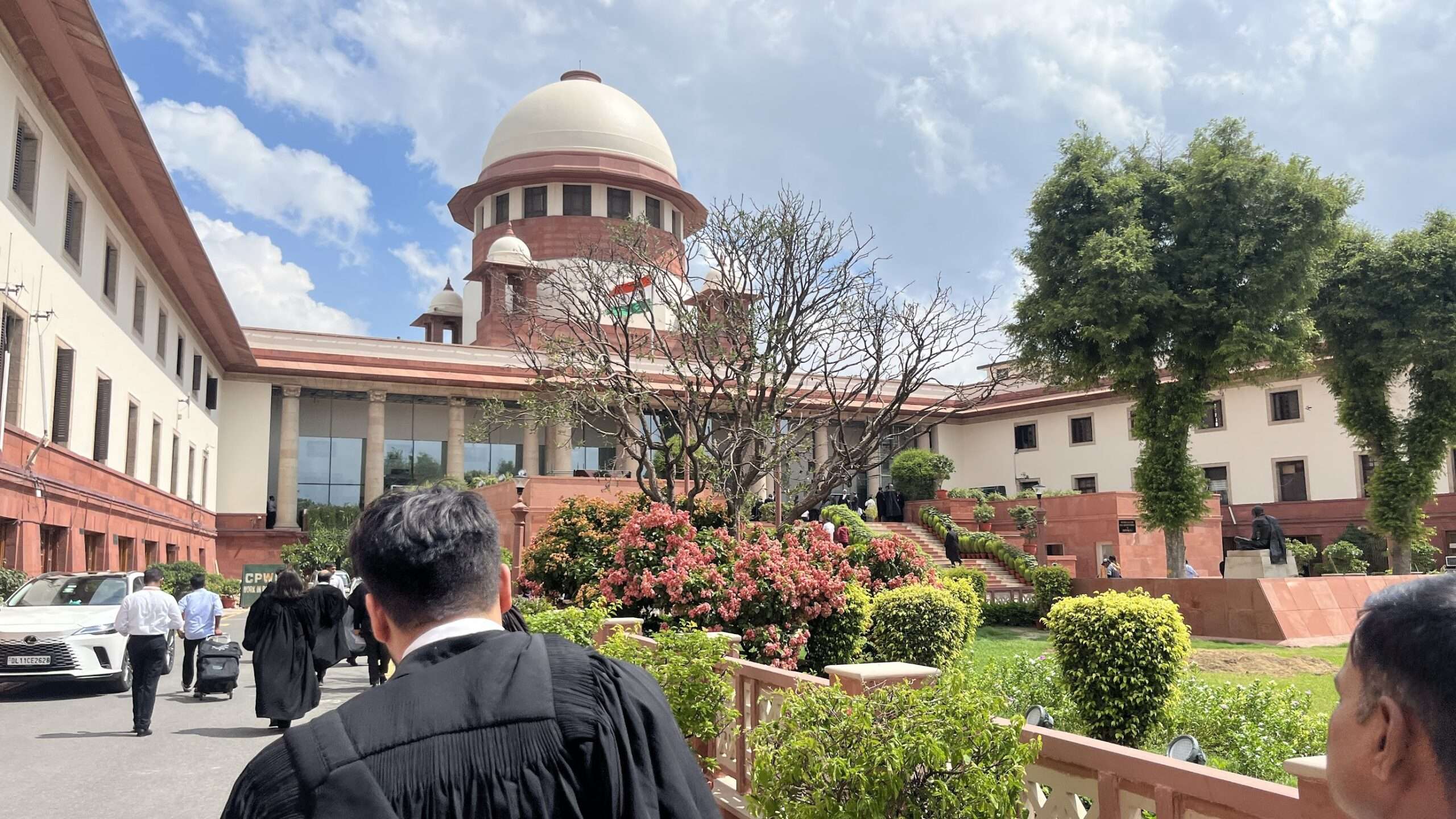
An Advocate on Record (AOR) is the only advocate authorised to file, act, and plead before the Supreme Court of India. This comprehensive guide explains the constitutional basis of the AOR system, the rigorous training and examination it requires, the responsibilities AORs shoulder in ensuring strict procedural compliance, and why they play a crucial role in securing efficient, high-quality access to justice before the nation’s highest court.
How to Draft a Special Leave Petition Under Article 136 That Survives the Admission Stage

pecial Leave Petition under Article 136 – Guide to Drafting an SLP that Survives the Supreme Court Admission Stage

A practical guide for Advocates-on-Record on drafting a Special Leave Petition under Article 136 that survives the Supreme Court’s admission stage. This article explains the constitutional foundation of SLP jurisdiction, how leave is granted, how to frame Questions of Law and Grounds with precision, and the drafting discipline required to avoid common causes of dismissal.

Special Leave Petition in Supreme Court: Law and Practice.

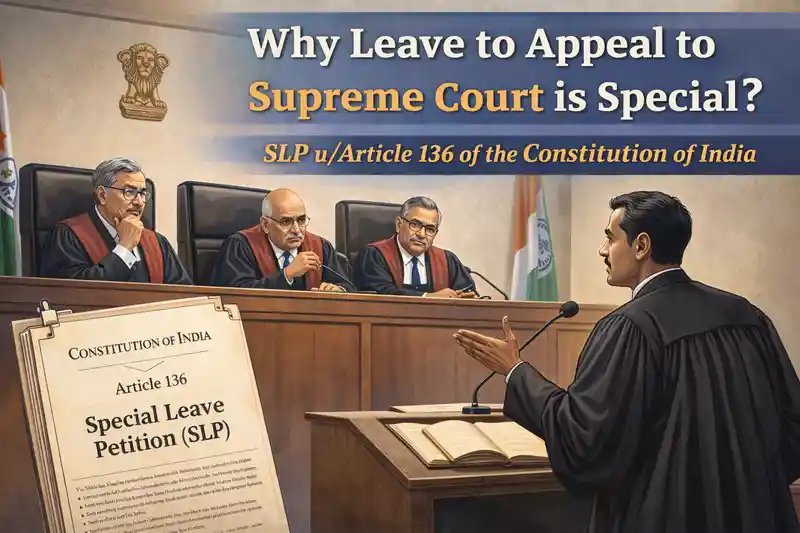
Lawyer arguing before judges for special leave to appeal under Article 136 — Supreme Court of India SLP concept.

This article explains why leave to appeal to the Supreme Court under Article 136 is considered extraordinary. It traces the history, discretionary nature, and judicial principles that make the Special Leave Petition a unique constitutional safeguard against injustice

The Origin and History of Special Leave to Appeal to the Supreme Court of India

History and origin of Article 136 - Special leave Petition

This article traces the historical evolution of the Supreme Court’s discretionary power of special leave under Article 136 — from the royal prerogative of the King-in-Council and Privy Council practice to the Government of India Act 1935, Constituent Assembly debates, and early Supreme Court jurisprudence. It explains how this extraordinary appellate jurisdiction developed as a constitutional safety valve to remedy grave injustice and address questions of law of public importance.

The Supreme Court Rules, 2013

Supreme Court Rules 2013 PDF download and overview of practice and procedure

The Supreme Court Rules, 2013 govern the practice and procedure before the Supreme Court of India. Framed under Article 145 of the Constitution, the Rules lay down the structure of filings, jurisdiction, timelines, and procedural requirements for every category of matter. This post provides access to the official PDF and a full bare text of Rules.

Effect of Dismissal of Special Leave Petition by Supreme Court and Doctrine of Merger

Supreme Court of India illustration explaining dismissal of Special Leave Petition and doctrine of merger.

This article explains the legal effect of the Supreme Court dismissing a Special Leave Petition (SLP) at the threshold and how it interacts with the doctrine of merger. It analyses leading judgments, clarifies whether review or further remedies remain available, and outlines when a subsequent SLP can still be maintained. A clear guide for practitioners navigating post-SLP strategy.